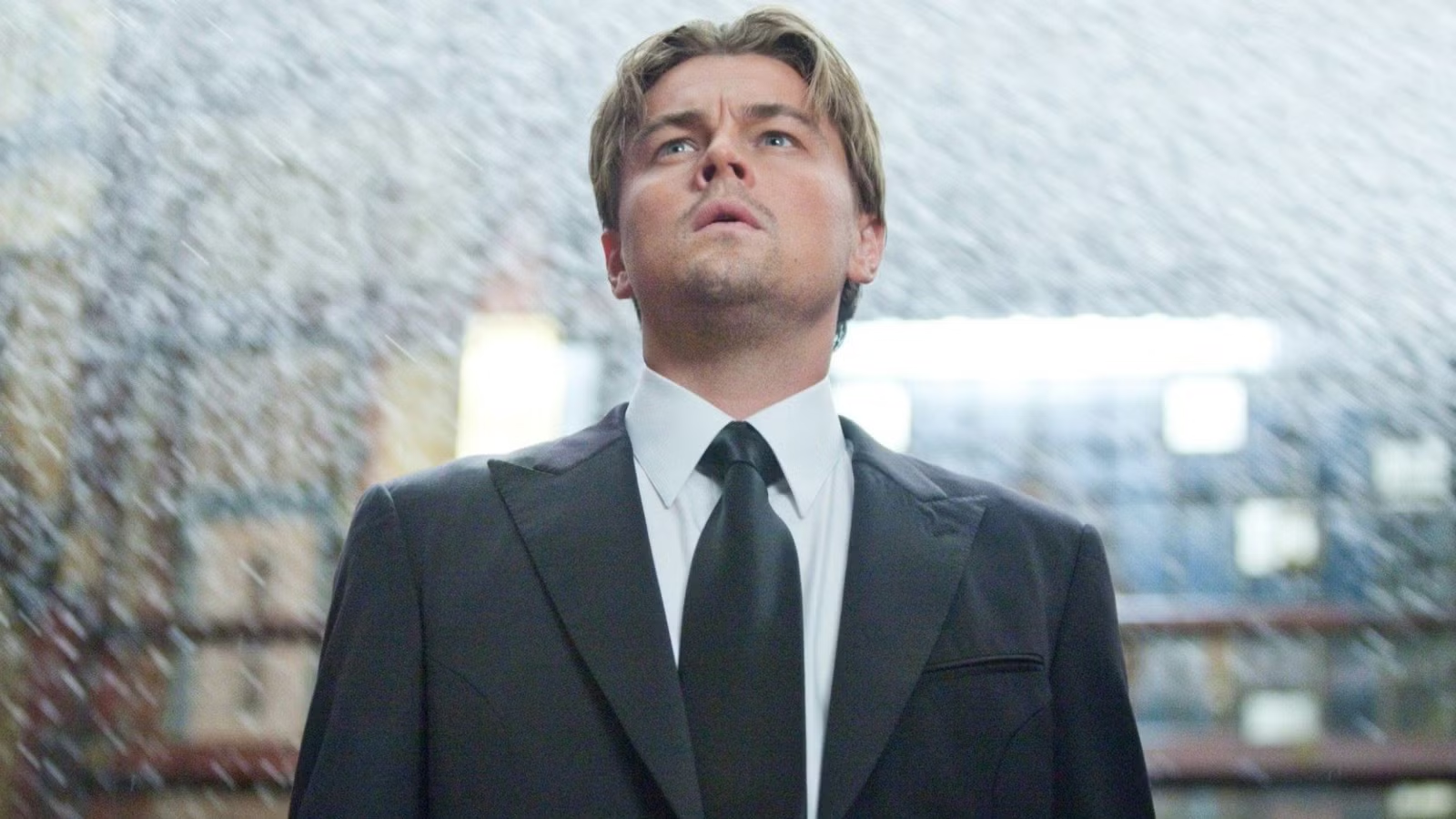
Leonardo DiCaprio has always been at his best when a character looks like he is barely holding himself together. In fact, his thrillers work because the danger usually attacks from both sides. The outside world is closing in. Yet, the man inside the story is already cracked, guilty, hunted, and desperate.
These five movies understand that perfectly. Some trap him in warzones, some in criminal crews, some in his own mind, and some inside grief so deep it starts bending reality. These are ranked from great to greatest, and are hands-down the best Leonardo DiCaprio thrillers.
5
‘Blood Diamond’ (2006)
Leonardo DiCaprio as Danny Archer in Blood Diamond.Image via Warner Bros.
Blood Diamond works because Danny Archer (Leonardo DiCaprio) is introduced as a smuggler, a survivor, and a man who has learned to treat other people’s suffering as terrain. In Sierra Leone, he hears about a massive hidden pink diamond and immediately views it as his only escape. And you’ve gotta admit, that unapologetic selfishness is exactly what gives the movie its bite. Additionally, he chain-smokes, scans the edges of every room, barters with danger, and kicks through the red dust always waiting for bullets instead of conversation.
Then Freetown erupts, the routes collapse, and the diamond stops being an easy payday. Archer is dragged across an active warzone with a desperate father, Solomon Vandy (Djimon Hounsou), and the movie becomes brutally physical. It turns into a loop of trekking, hiding, bargaining, and surviving. What starts as greed slowly turns into something messier and more human. Look, the stone keeps its massive price tag, but at the end of the day, Archer’s ultimate choices are what actually make the whole thing unforgettable.
4
‘One Battle After Another’ (2025)
Leonardo DiCaprio holding a weapon in the middle of a highway in One Battle After Another.Image via Warner Bros. Pictures
One Battle After Another throws DiCaprio into a different kind of panic, the panic of a man whose past finally kicks down the door. The story follows Pat Calhoun (Leonardo DiCaprio), living under the name Bob Ferguson, who has settled into a paranoid, off-grid existence with his daughter, Willa (Chase Infiniti). He is washed-up, stoned, jumpy, and clearly clinging to isolation because the outside world contains consequences he has spent years avoiding.
Of course, you can only hide for so long before your past catches up. The second an old counterterrorist nightmare kicks off and his daughter Willa goes missing, Bob’s quiet little bubble completely detonates. Honestly, the best part of the movie is just watching this guy hopelessly scramble through a modern world he completely misses the rhythm of. He is always a step behind, and every move he makes just reeks of pure desperation. Instead of a standard clean action flick, the whole film has this chaotic, dizzying energy that keeps you totally off-balance. Sure, the shootouts are tense, but the real gut-punch is that father-daughter panic. When Bob goes sprinting after Willa, you realize he isn’t just trying to find her. He is running headfirst back into the exact nightmare he spent his life trying to ditch.
Collider Exclusive · Oscar Best Picture Quiz Which Oscar Best Picture Is Your Perfect Movie? Parasite · Everything Everywhere · Oppenheimer · Birdman · No Country
Five Oscar Best Picture winners. Five completely different visions of what cinema can be — and what it can do to you. One of them is the film that was made for the way your mind works. Ten questions will figure out which one.
🪜Parasite
🌀Everything Everywhere
☢️Oppenheimer
🐦Birdman
🪙No Country for Old Men
01
What kind of film experience do you actually want? The best movies don’t just entertain — they leave something behind.
02
Which idea grabs you most in a film? Great films are driven by a central obsession. What’s yours?
03
How do you like your story told? Form is content. The way a story is shaped changes what it means.
04
What makes a truly great antagonist? The opposition defines the protagonist. What kind of opposition fascinates you?
05
What do you want from a film’s ending? The final note is the one that lingers. What do you want it to sound like?
06
Which setting pulls you in most? Where a film takes place shapes everything — mood, stakes, what’s even possible.
07
What cinematic craft impresses you most? Every great film has a signature — a technical or artistic element that makes it unmistakable.
08
What kind of main character do you root for? The protagonist is the lens. Who you choose to follow says something about you.
09
How do you feel about a film that takes its time? Pace is a choice. Some films sprint; others let tension accumulate slowly, deliberately.
10
What do you want to feel walking out of the cinema? The best films leave a mark. What kind of mark do you want?
The Academy Has Decided Your Perfect Film Is…
Your answers have pointed to one Oscar Best Picture winner above all others. This is the film that was made for the way your mind works.
Parasite
You are drawn to films that operate on multiple levels simultaneously — that begin in one genre and quietly, brilliantly migrate into another. Bong Joon-ho’s Parasite is a film about class, desire, and the architecture of inequality that manages to be darkly funny, deeply suspenseful, and genuinely shocking across a single extraordinary running time. Your instinct is for cinema that hides its true intentions until the moment it’s ready to reveal them. Parasite is exactly that — a film that rewards close attention and punishes assumptions, right up to its devastating final image.
Everything Everywhere All at Once
You want it all — and this film gives you all of it. The Daniels’ Everything Everywhere All at Once is one of the most maximalist films ever made: action comedy, multiverse sci-fi, family drama, existential crisis, and a genuinely earned emotional core that sneaks up on you amid the chaos. You are someone who responds to ambition, who doesn’t want cinema to choose between being entertaining and being meaningful. This film refuses that choice entirely. It is overwhelming by design, and its overwhelming nature is precisely the point — because the feeling of being crushed by infinite possibility is exactly what it’s about.
Oppenheimer
You are drawn to cinema on a grand scale — films that understand history not as a backdrop but as a force, and that place their characters inside that force and watch what happens. Christopher Nolan’s Oppenheimer is a film about the terrifying gap between what we can do and what we should do, told with the full weight of one of the most consequential moments in human history behind it. You want your films to feel important without feeling self-important — to earn their ambition through sheer craft and the gravity of their subject. Oppenheimer does exactly that. It is enormous, complicated, and refuses easy comfort.
Birdman
You are drawn to films that foreground their own construction — that make the how of the filmmaking part of the what it’s about. Alejandro González Iñárritu’s Birdman, shot to appear as a single continuous take, is cinema examining itself through the cracked mirror of a fading actor’s ego. You respond to formal daring, to the feeling that a film is doing something that probably shouldn’t be possible. Michael Keaton’s performance and Emmanuel Lubezki’s restless camera create something genuinely unlike anything else — a film that is simultaneously about creativity, relevance, self-destruction, and the impossibility of ever truly knowing if your work means anything at all.
No Country for Old Men
You are drawn to cinema that trusts silence, that refuses to explain itself, and that treats dread as a form of meaning. The Coen Brothers’ No Country for Old Men is a film about the arrival of a new kind of evil — implacable, arbitrary, and utterly indifferent to the moral frameworks we use to make sense of the world. It is one of the most formally controlled films ever made, and its controlled restraint is what makes it so terrifying. You want your films to haunt you, not comfort you. You are not interested in resolution if resolution would be dishonest. No Country for Old Men is honest in a way that most cinema never dares to be.
3
‘The Departed’ (2006)
Undercover cop Billy Costigan (Leonardo DiCaprio) disguises himself with a cap as he peeks around the corner of a brick wall in ‘The Departed’ (2006).Image via Warner Bros. Pictures
The Departed is unbearable in the best way because Billy Costigan (Leonardo DiCaprio) looks like he is being eaten alive by his own cover. He enters the mob run by Frank Costello (Jack Nicholson) to prove he is not the criminal history attached to his family name, but the deeper he goes, the less that distinction seems to matter. Every room is a test. Every joke could be a threat. Every vibrating phone feels like it might be the sound that gets him killed.
You look at Billy and just see a guy whose nerves are absolutely shot. DiCaprio sells the hell out of it with the chewed-up nails, the dead eyes, and this wild terror he tries to pass off as tough-guy swagger. He spends every day pretending to be the exact type of scumbag he hates, and it is just grinding him down to dust. The film itself makes you feel like you’re staring down a loaded gun. Regular chats go on way too long, and you can feel the suspicion hanging heavy in the air long before anyone says a word. Once both sides figure out there’s a mole, with Colin Sullivan (Matt Damon) mirroring his panic on the police force, Billy is already trapped playing a part where survival means burying his true self forever. The whole story is just a slow, relentless vice grip cranking tighter and tighter around his neck. Then it snaps.
2
‘Shutter Island’ (2010)
Leonardo DiCaprio and Mark Ruffalo as U.S. Marshals investigating a case in Shutter IslandImage via Paramount Pictures
Teddy Daniels arrives at Ashecliffe Hospital with a badge, a partner Chuck Aule (Mark Ruffalo), and a missing patient to find. Everything is orderly, procedural, and completely manageable. Then the hurricane rolls in. Shutter Island instantly takes the detective procedural and makes it into something else. The rain battering the asylum walls doesn’t stop. The staff stops answering questions directly. Teddy’s migraines arrive, head cradled in both hands, squinting against the harsh light and his grip on the investigation starts slipping in ways he can’t fully account for.
DiCaprio spends most of the film inside the meticulous, collapsing process of Teddy’s mind working against itself, interrogating patients, following leads, following hallucinations, then going back to check which was which. Once it resolves, the film has been doing something far more ambitious than mystery all along. That balance of a stormy, unpredictable surface over a devastatingly human interior makes it the perfect thriller.
1
‘Inception’ (2010)
Leonardo DiCaprio intently watching a top spinning on a table in Inception.Image via Warner Bros.
The dream heist is a remarkable piece of cinematic engineering, and Nolan builds it with the kind of precision that rewards multiple viewings. But Inception isn’t really about the heist. The film follows Dom Cobb (Leonardo DiCaprio), who can infiltrate anyone’s subconscious, plant ideas, steal secrets, and construct entire architecture from memory. What he simply cannot do is go home to his children. That is the film’s actual engine.
Mal (Marion Cotillard), the dead wife who keeps surfacing in the dream layers to sabotage everything, is simply Cobb’s guilt given physical form. DiCaprio is constantly crushed by an enormous interior weight while trying to project complete control to the people depending on him, especially the perceptive architect Ariadne (Elliot Page), and that gap is where the film lives. Inception remains one of the defining blockbusters of its decade, with that spinning top at its center that nobody has stopped arguing about.
 Skip to content