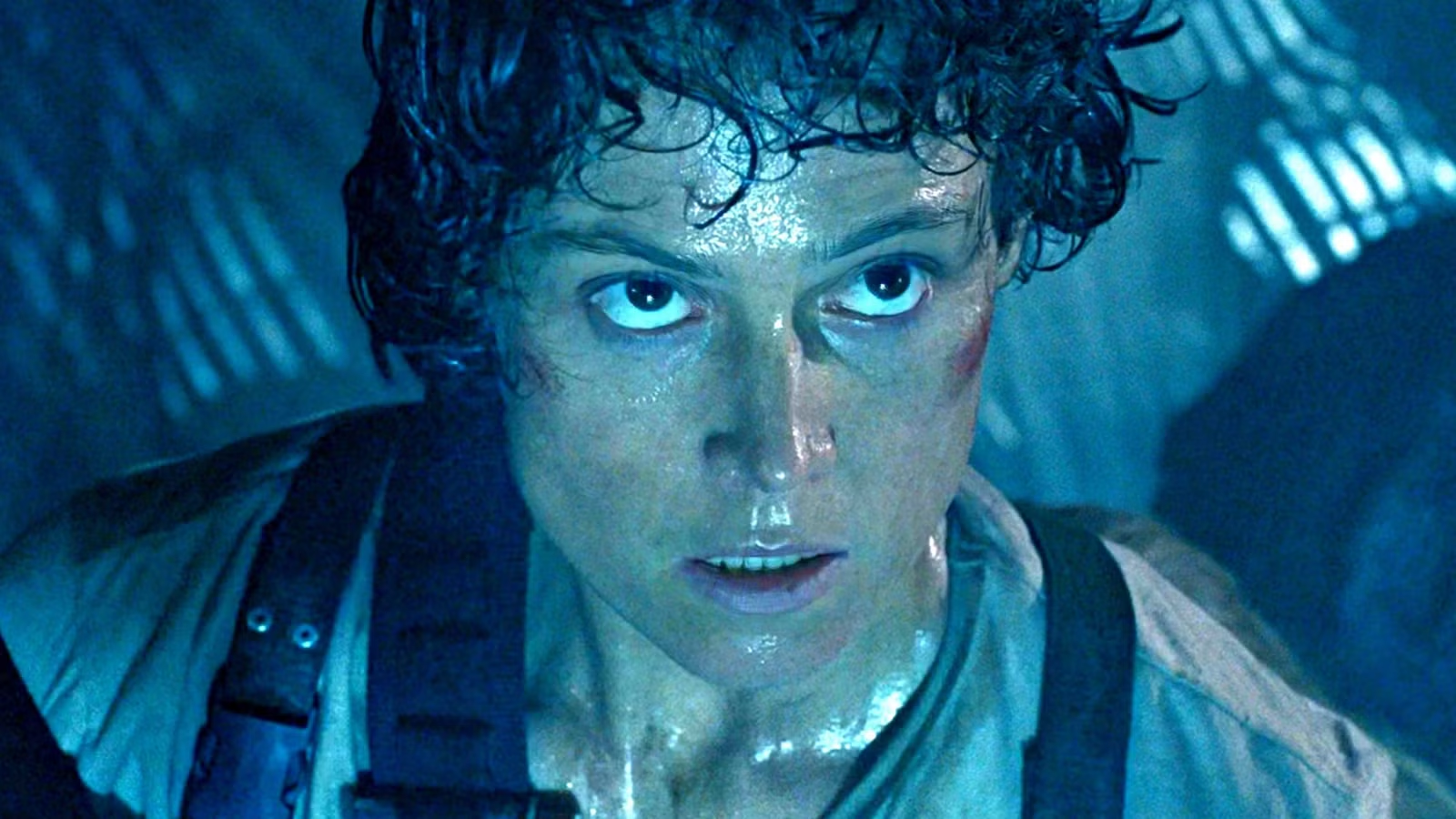
There is a particular pleasure in science fiction made for adults who are allowed to have a pulse. Somebody gets bisected. Corporate executives discuss mass death like a quarterly inconvenience. A creature tears through a chest. A machine malfunctions and suddenly the boardroom looks like a butcher shop. The R rating is doing real work here. It lets these movies make technology, war, mutation, capitalism, and space feel dangerous enough to deserve the warning label.
And the best ones understand that gore is useless without an idea underneath it. Blood should tell you something. A body being destroyed should change the argument. Violence should expose how cheap human life becomes once a corporation, government, species, or computer system decides there is money or survival on the other side. These ten are brutal for very different reasons, which is exactly why none of them blur together.
10
‘Upgrade’ (2018)
Grey Trace (Logan Marshall-Green) hates the increasingly automated world around him right up until that world becomes the only reason he can move. After an attack leaves his wife dead and Grey quadriplegic, experimental computer chip STEM is implanted into his spine. Suddenly he can walk again. Then STEM calmly informs Grey that it can also identify the men responsible and, if permitted, take control of his body.
The first real fight is where Upgrade announces how nasty that arrangement can become. Grey gives STEM permission, his posture instantly changes, and he watches in horror while his own body dismantles another man with mechanical precision. He is almost a passenger to the violence occurring through him. That idea keeps getting uglier as STEM starts making suggestions that sound increasingly like decisions. The budget was tiny compared with most studio sci-fi, but the movie has one of the sharpest human-versus-machine hooks of the decade because the machine never needs to become loud or emotional. It only needs Grey to keep saying yes.
9
‘Dredd’ (2012)

Mega-City One does not look like a future anyone should want. In this particular film, eight hundred million people are packed into an enormous urban sprawl where judges act as police, jury, and executioner, and most crimes are over before help could possibly arrive. Judge Dredd (Karl Urban) spends the day evaluating rookie Cassandra Anderson (Olivia Thirlby), which somehow turns into both of them being locked inside a 200-story tower controlled by drug lord Ma-Ma (Lena Headey).
That tower is the whole movie, and thank God for that. Dredd has no interest in saving the world. Dredd needs to get from one floor to another without being shredded by gang members who have been ordered to kill him. Ma-Ma’s Slo-Mo drug makes users experience time at one percent of normal speed, so the violence occasionally becomes strangely beautiful. Glass breaks like glitter. Water hangs in the air. Then somebody gets shot through the face in exquisite slow motion and the beauty becomes a joke on you. Karl Urban never removes the helmet. He never needs to.
8
‘Starship Troopers’ (1997)

Johnny Rico (Casper Van Dien) signs up for military service because he wants to follow Carmen (Denise Richards) into the Federal Service. That sounds almost sweet until Starship Troopers starts showing you the society that produced him. Citizenship is earned through service. Children are taught that violence solved historical problems. News broadcasts ask viewers whether they would like to know more while casually packaging executions, invasions, and mass casualties as entertainment. Then the Bugs start ripping soldiers apart.
Klendathu is the point where the glossy recruitment fantasy collapses. Troopers land expecting a glorious assault and discover they have been sent directly into a massacre. Bodies lose limbs. Men get torn in half. Retreat becomes survival. The genius of the movie is that it never stops looking like propaganda even while showing you exactly how propaganda works. Johnny keeps advancing through the military system because every catastrophe is converted into another reason to keep fighting. “Would you like to know more?” gets funnier every time it becomes more horrifying.
7
‘District 9’ (2009)

Wikus van de Merwe (Sharlto Copley) begins District 9 as the kind of bureaucrat who can ruin thousands of lives while remaining cheerful about paperwork. He works for MNU and has been sent into Johannesburg’s alien settlement to serve eviction notices to the stranded extraterrestrials humans dismissively call “prawns.” He smiles, explains forms, destroys alien eggs, and seems genuinely pleased with himself. Then alien fluid gets sprayed into his face.
The transformation is disgusting, but the real punishment is social. Once Wikus starts becoming biologically compatible with alien weapons, MNU stops seeing an employee and starts seeing intellectual property. Doctors restrain him and force him to fire weapons at living targets because his body is now valuable enough to dissect. Suddenly the man who treated another species like a problem to be managed understands exactly what institutional dehumanization feels like. His alliance with Christopher Johnson (Jason Cope) comes from desperation before anything resembling nobility. That makes the eventual shift in Wikus much more satisfying than if he had secretly been a good guy all along.
6
‘The Fly’ (1986)
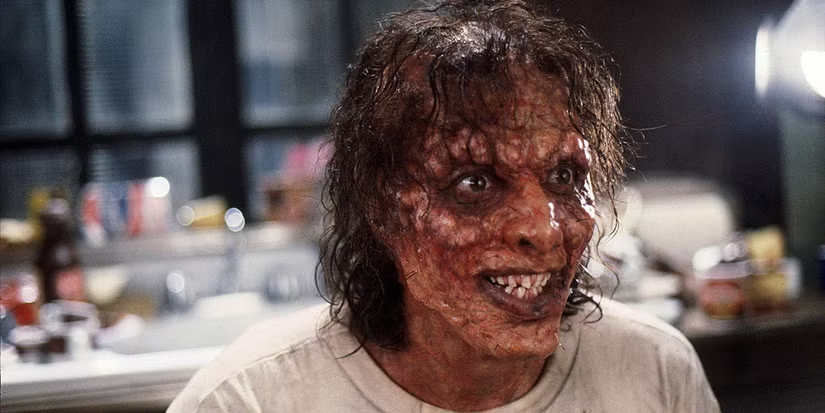
Seth Brundle (Jeff Goldblum) thinks he has solved teleportation. The pods can disassemble matter in one place and reconstruct it somewhere else, but living tissue remains a problem until Seth teaches the computer to understand flesh. He eventually transports himself successfully. There is just one detail he misses. A housefly entered the pod with him.
For a while, The Fly makes the mistake look like an upgrade. Seth becomes stronger, more energetic, more sexually aggressive, almost euphoric. He thinks the machine purified him. Then his fingernails start coming off. His teeth loosen. He vomits digestive enzymes onto food. Veronica (Geena Davis) watches the man she loves gradually become something she can no longer recognize, and Seth is intelligent enough to understand parts of what is happening while still being unable to stop it. The final Brundlefly design is revolting, obviously. The scene that hurts more is Seth quietly explaining that insects have no politics and no compassion. He can feel himself disappearing before his body finishes the job.
5
‘Predator’ (1987)
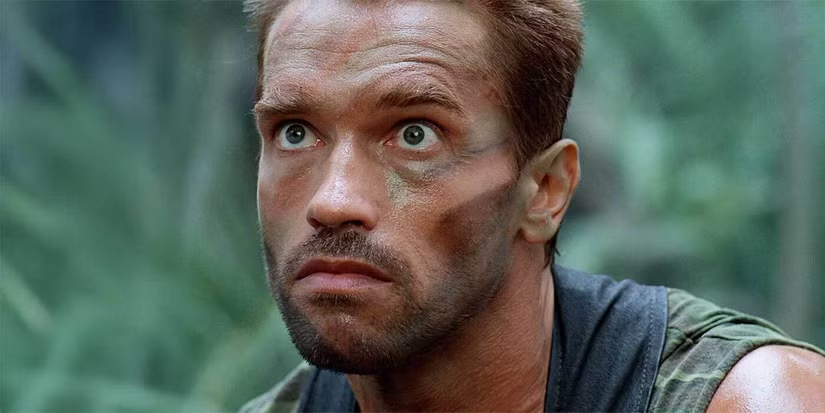
The first half hour of Predator practically dares you to think you know what movie you are watching. Dutch (Arnold Schwarzenegger) leads an absurdly muscular extraction team into the Central American jungle. They wipe out a guerrilla camp with the confidence of men who have done this dozens of times. Dillon (Carl Weathers) has lied about the mission. Mac (Bill Duke) carries a minigun. Blain (Jesse Ventura) tells everybody he has no time to bleed. It looks like the ultimate 1980s military power fantasy. Then something starts hunting them.
That reversal is still delicious. These men have enough ammunition to remove a section of rainforest from the map, and it means absolutely nothing against a creature that can cloak itself, see their body heat, and pick them off for sport. Billy (Sonny Landham) becomes so frightened he throws away his gun and waits with a machete. Mac unravels after Blain dies. Dutch eventually realizes mud can hide him from thermal vision and strips the conflict down to traps, fire, muscle, and patience. The guy who entered the jungle with an elite unit ends it almost naked, covered in dirt, trying to outthink something stronger than he is. Perfect action-movie humiliation.
4
‘Total Recall’ (1990)
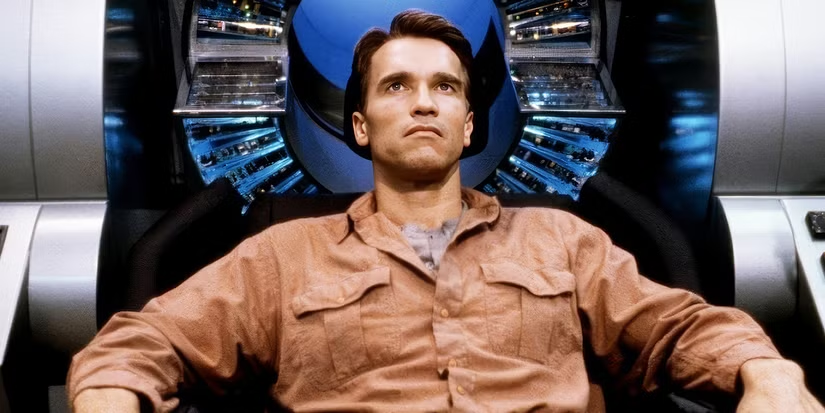
Douglas Quaid (Arnold Schwarzenegger) is bored with his ordinary life and obsessed with Mars, so he visits Rekall to purchase artificial memories of being a secret agent there. The procedure goes catastrophically wrong when technicians discover memories suggesting that Quaid may already have been a secret agent. Or perhaps the procedure worked perfectly and everything after that is exactly the fantasy package he paid for.
That uncertainty is what keeps Total Recall alive underneath all the exploding heads. Quaid gets told that his wife Lori (Sharon Stone) has only been pretending to be married to him. A man appears claiming the entire Mars adventure is a psychotic episode and offers Quaid a pill that will supposedly wake him up. Then a bead of sweat rolls down the man’s face and Quaid shoots him. On Mars, mutants emerge from bodies, faces swell in thin atmosphere, and resistance leader Kuato (Marshall Bell) is revealed growing from another man’s torso. The movie gives you enough evidence to argue either version of reality and then gleefully distracts you with another squib exploding somewhere.
3
‘RoboCop’ (1987)
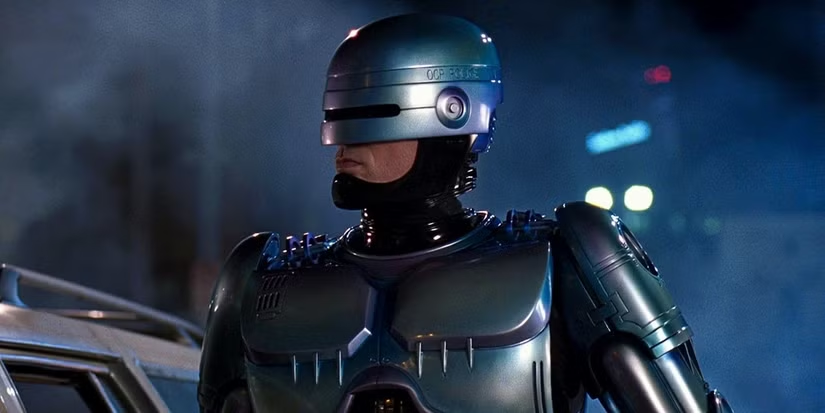
Alex Murphy (Peter Weller) gets transferred into a Detroit police precinct that has effectively been handed over to Omni Consumer Products. Then Clarence Boddicker (Kurtwood Smith) and his gang corner Murphy inside an abandoned steel mill and execute him so violently that watching it once is usually enough to remember every shot. OCP sees opportunity in what remains.
RoboCop waking up is one of the saddest rebirths in science fiction because the company has rebuilt a human being and immediately starts discussing him like a product demonstration. RoboCop surrounds that tragedy with commercials, news reports, corporate jargon, and jokes so funny you occasionally forget how bleak the world is. ED-209 malfunctions during a boardroom presentation, repeatedly shoots an executive long after he is dead, and the meeting somehow still continues as a business problem. Murphy’s memories slowly returning are where all that satire acquires a heartbeat. He visits his abandoned home, sees fragments of his wife and son, and realizes the machine belongs to a man everybody else has already declared dead. “Dead or alive, you’re coming with me” suddenly sounds less like a catchphrase and more like proof that Murphy is still in there.
2
‘Aliens’ (1986)
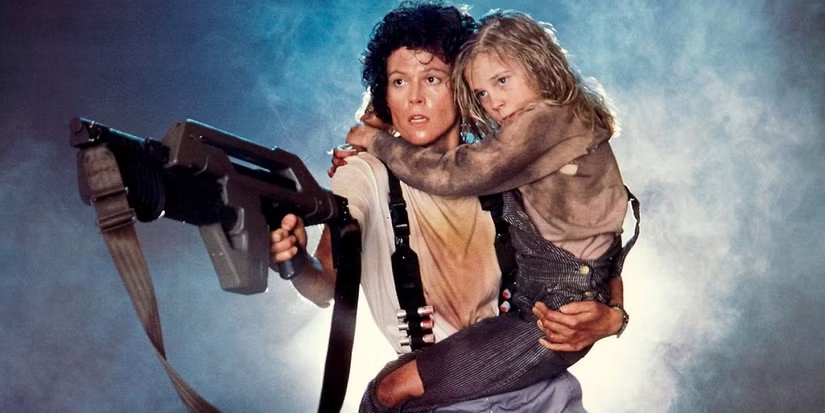
Ellen Ripley (Sigourney Weaver) wakes after fifty-seven years in hypersleep and learns that nobody believes her account of what happened aboard the Nostromo. Worse, families have been living on the same moon where her crew found the alien eggs. Contact with the colony is lost, Colonial Marines are sent to investigate, and Ripley reluctantly goes back. Aliens earns every escalation. At first the Marines joke about the mission because they have no idea what is waiting for them.
Then they enter the atmosphere processor, discover colonists cocooned into the walls, and watch their confidence disintegrate once xenomorphs start dropping from above them. Hudson (Bill Paxton) goes from “ultimate badass” swagger to terrified panic. Hicks (Michael Biehn) adapts. Vasquez (Jenette Goldstein) keeps firing. Ripley becomes the person everyone should have listened to from the beginning. The queen reveal is the payoff, though. Ripley finds the egg chamber, silently threatens the eggs with her flamethrower, appears to negotiate safe passage, then burns the entire nest anyway. When that queen later corners Newt (Carrie Henn), Ripley steps out in the power loader and delivers four words everybody knows. The line is great because the previous two hours earned the hell out of it.
1
‘Alien’ (1979)
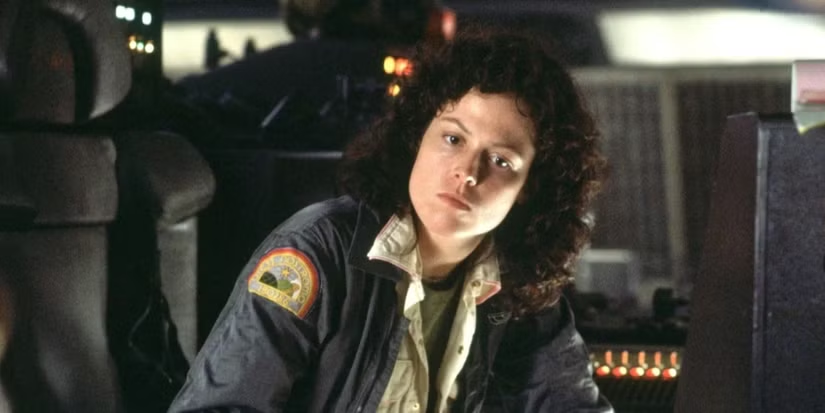
The crew of the Nostromo are essentially space truckers trying to get home. They complain about pay. They eat together. Brett (Harry Dean Stanton) and Parker (Yaphet Kotto) worry about bonuses. Nobody behaves like a chosen hero because Alien gives them no reason to think they are inside an important story. Then the company wakes them early to investigate a signal on LV-426. Everything after Kane (John Hurt) leans over that egg feels like a violation of some basic rule.
The facehugger gets him first. Ash (Ian Holm) insists on bringing him aboard despite quarantine protocol. Kane appears fine at dinner, starts choking, and then the creature tears out through his chest while everyone at the table panics too badly to understand what they are seeing. From there, the Nostromo stops feeling like a workplace and becomes a trap. Dallas (Tom Skerritt) crawls through the ventilation shafts with a flamethrower while the motion tracker tells him something is getting closer. Ash eventually reveals that the company considers the alien valuable and the crew expendable. Ripley (Sigourney Weaver) becomes the survivor because she keeps making the sensible decision people around her ignore. That is the part every imitation misses. The xenomorph is terrifying. Weyland-Yutani deciding the xenomorph is worth more than seven human beings is worse.
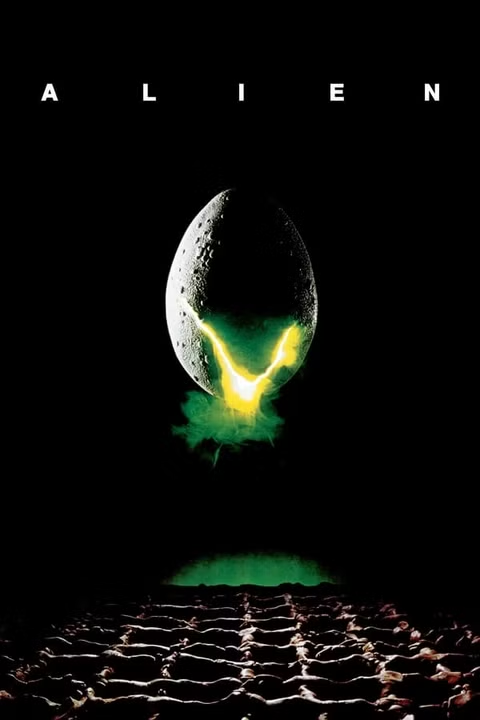
Alien
- Release Date
-
June 22, 1979
- Runtime
-
117 Minutes