These days, it seems like original ideas and Hollywood don’t often go together. Sure, there are exceptions to this rule (especially in genres like horror), but more often than not, it seems like a novel is once again being mined for the big screen. While book-to-screen adaptations vary in quality, it can be fun to see your favorite stories come to life outside of even your own imagination — and it’s even better when a filmmaker’s creative vision matches the story in your head. But some books warrant more than just a movie.
When it comes to some of the most celebrated and cherished novels out there, there are times when two-and-a-half hours just won’t cut it. In those instances, a miniseries is required to properly detail what makes the book so special. So, we’ve put together our list of classic novels that ought to be adapted not to the big screen but to the small screen in order for the story to properly be told. So get out your bookmarks, because we’re heading on a literary adventure!
‘1984’ (1949)
Originally styled as Nineteen Eighty-Four, George Orwell‘s iconic dystopian novel has been considered one of the most culturally prophetic writings of the 20th century. With so many terms that have become commonplace in our modern vernacular — “Big Brother,” “Thought Police,” “doublethink,” etc. — it’s difficult to imagine why 1984 hasn’t yet been turned into a streaming series. Of course, after the latest animated Animal Farm (one of the greatest novellas), it’s easy to lose faith in any modern streamer’s ability to do Orwell right.
As three superstates are at war with one another, 1984 satirizes government surveillance and control, the overarching reach of the news media, and the role of propaganda in society. It certainly still feels relevant today, no matter which side of the political aisle you reside on. “Orwellian” isn’t a popular term for nothing.
‘Northanger Abbey’ (1817)
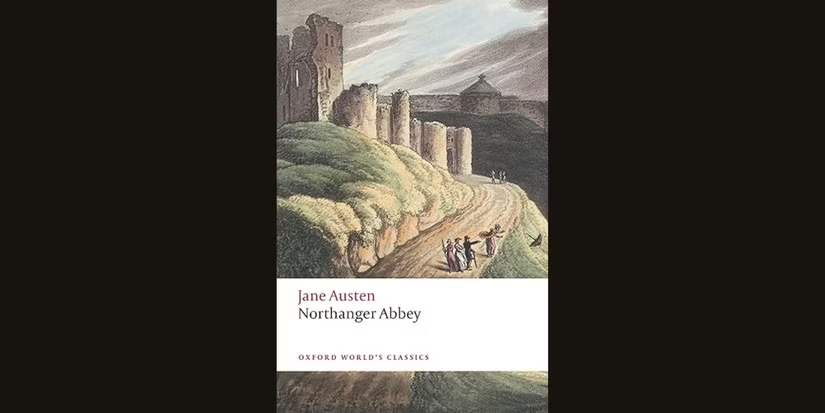
While not one of Jane Austen’s most famous literary works, it was published posthumously alongside Persuasion, which is often considered among the best. Northanger Abbey follows an imaginative young woman named Catherine Morland as she falls into the middle of two distinct families, only to find herself in love with the son of a preacher. A lover of Gothic literature, Catherine nearly allows her preconceived notions about the world to ruin things for her.
While there have been television adaptations of Northanger Abbey, all of them were made-for-TV features rather than miniseries. A miniseries would offer the viewer more time in Catherine’s head as she navigates the differences between fiction and reality, allowing Austen’s trademark style to shine through. It may not be likely that we’ll see this book in a longer format, but considering that all of Austen’s other novels have been made into miniseries, it shouldn’t be left out.
‘Dracula’ (1897)
Alright, to be fair, Bram Stoker‘s famous vampire novel has been made into a miniseries before, but considering that every adaptation gets Dracula wrong, it’s about time that we get one that’s right. The iconic horror novel is a masterclass in riveting Gothic storytelling and fine-tuned characters. As the titular Count Dracula decides to leave Transylvania for 19th-century London, a cast of eclectic and passionate characters assemble to stall his dark reign.
Most Dracula adaptations focus on modern takes on his potential “romance” with Mina (not in the books) or try to sympathize with the monster, but Stoker’s novel doesn’t offer such a complicated tale. While Dracula is robust, full of engaging side-plots, imaginative horrors, and plenty of melodrama, it follows characters deeply moved in the battle against evil. It deserves a proper page-to-screen adaptation, which may only be possible in a miniseries format.
‘The Pilgrim’s Progess’ (1678)

Despite being one of the most popular books ever written, The Pilgrim’s Progress has never had a proper adaptation. John Bunyan’s Christian allegory blends fantasy with deep human drama to tell a spiritual tale of redemption and perseverance. As Christian leaves the City of Destruction for the Celestial City, he finds that every obstacle along the way is there to get directly in his path.
A miniseries would be the perfect way to explore this timeless tale full of giants, dragons, demons, and other colorful villains. Although religious audiences would be the primary audience (like these shows with Christian themes), there’s no doubt that The Pilgrim’s Progress is beloved by many who appreciate the literary arts. It may take some real love and care to bring it to life, but it would be a delight for all who took the pleasure to see it through.
‘The Red Pony’ (1937)
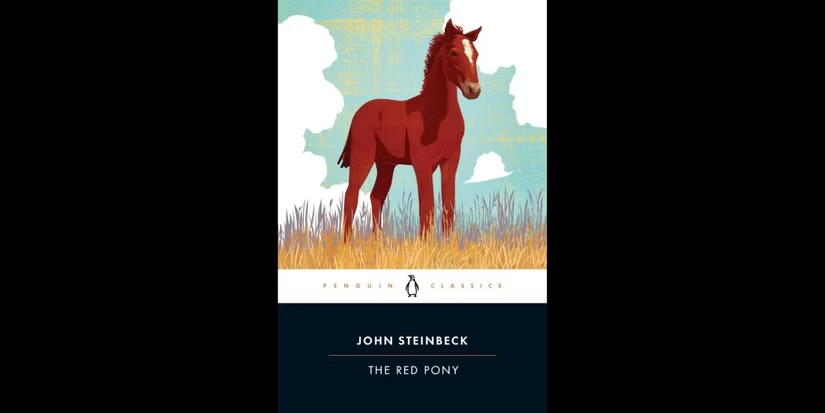
Perhaps one of John Steinbeck‘s most underrated works, The Red Pony is a simple collection of stories following young Jody Tiflin on his father’s California ranch. A coming-of-age tale of boyhood that deals with love, loss, grief, fear, and the excitement and potential of adventure, the story is already segmented into episodic portions perfect for the screen. It’s a brilliant book that is worthy of extra love.
Steinbeck has already penned some of the greatest American novels, and while The Red Pony isn’t a novel-length investment, it does warrant a miniseries format. Even if the episodes were shorter — 20 minutes each could work — it’s the proper way to bring such a beloved story to life. If you haven’t had the pleasure of reading this one yet, let this be your sign to do so.
‘To Kill a Mockingbird’ (1960)
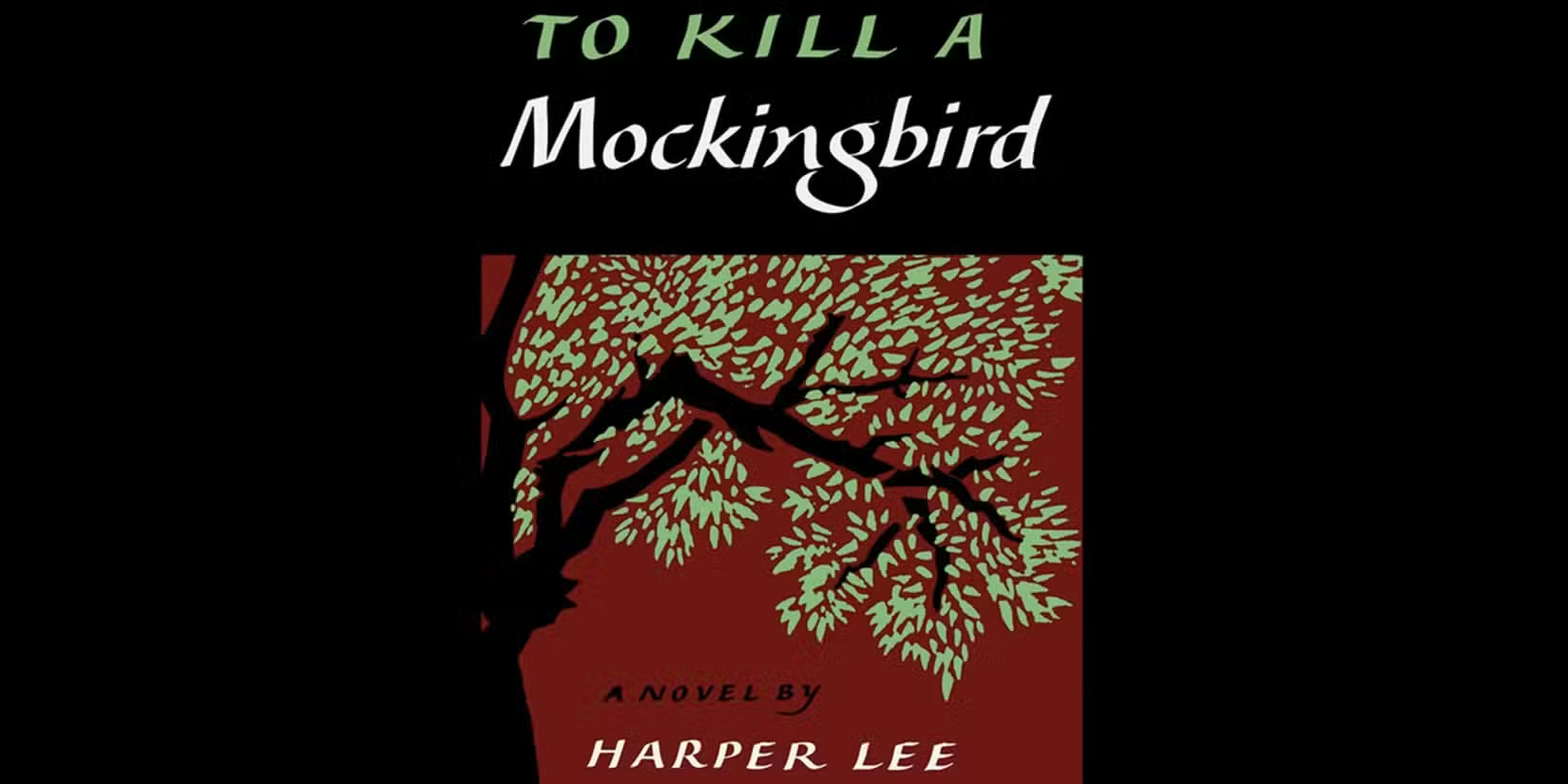
Okay, the truth of the matter is that no future adaptation will be able to rival what Gregory Peck did as Atticus Finch in the movie adaptation of To Kill a Mockingbird — itself possibly the “great American novel.” It’s true, that film is brilliant and shouldn’t be touched. Still, Harper Lee‘s adored novel offers more material than the original big-screen version had time to unpack, with more characters, subplots, and context that make Scout’s story feel fuller than 129 minutes ever could.
A miniseries may just be the best way to adapt To Kill a Mockingbird next after it’s already been done on the stage and the screen. The extended format would allow Lee’s whole world to shine through, giving us more context for Scout’s school and family lives, as well as the sequence where Calpurnia takes Scout and Jem to her all-black church service. There’s so much more in the book.
‘Fahrenheit 451’ (1953)
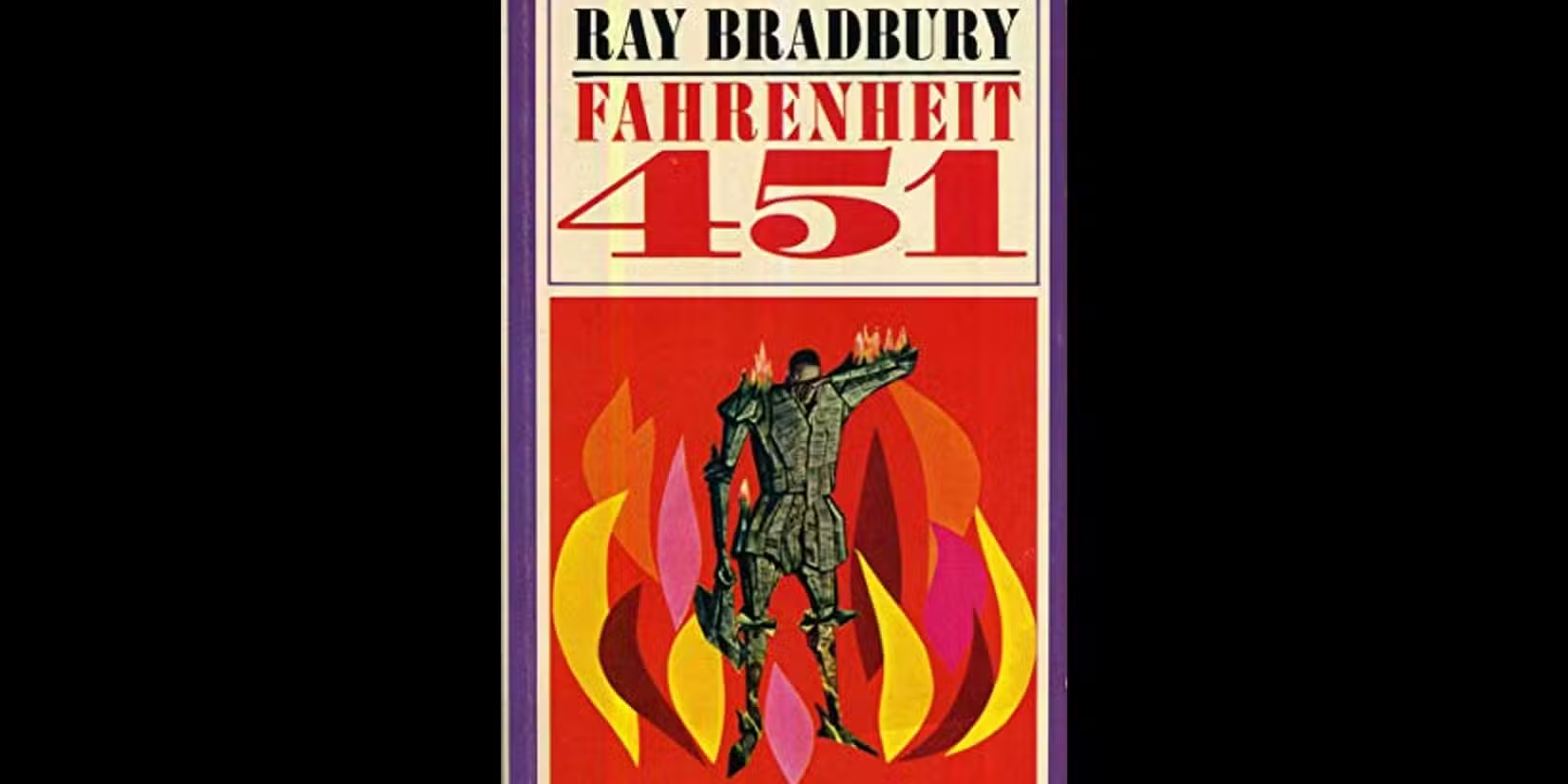
Thus far, Ray Bradbury‘s Fahrenheit 451 has been adapted twice for the screen. The first film did a decent job sticking to the material (even with some obvious adjustments), while the second HBO-made movie was horrendous. However, the story of dystopian fireman Guy Montag, like 1984, feels more relevant than ever, and a miniseries may have the opportunity to finally do the whole thing right.
Fahrenheit 451 is a complex, psychological, philosophical, and even spiritual novel that deserves a true full-length adaptation that doesn’t pull punches or cut back. Not only is it among the most influential soft sci-fi books out there, but it’s so frighteningly prophetic that it’s hard to look at the world the same way again after reading. Bradbury is a master at work, and, as an honorable mention, his dark fantasy novel Something Wicked This Way Comes would also be great as a miniseries.
‘The Voyage of the Dawn Treader’ (1953)

No installment of C. S. Lewis‘ famed The Chronicles of Narnia deserves a proper miniseries adaptation more than The Voyage of the Dawn Treader. While the third published Narnia novel has been adapted into a feature film, it famously condensed and spliced together too much of the material from the Dawn Treader‘s journey. Instead, the swashbuckling adventures of Caspian, Edmund, Lucy, and Eustace deserves a miniseries, which would allow the voyage to flow naturally and without the need to cut vital chapters.
Indeed, of all the Chronicles of Narnia that we want to see adapted, this one is near the top. A proper retelling of this rich fantasy tale would allow time for each of the distinct islands to be visited in earnest, and give characters like Eustace the necessary bandwidth for redemption rather than a quick on-screen turnaround. While the novel has technically been done on TV before by BBC back in the ’80s, it certainly wouldn’t hurt to do it over again with a bit more gusto.