 Skip to content
There are very few genres that reward an attentive audience quite like a traditional whodunit. From the moment a body is discovered, or a will is read, or a dinner party takes a sinister turn, the contract between filmmaker and viewer is clear: someone here is lying, everyone has a motive, and the truth is usually hiding in plain sight. Deeply rooted in the golden age of detective fiction, these movies have given the genre a life of its own, and the best ones, such as The Thin Man, Murder on the Orient Express, and Clue, offer audiencesmore than a cryptic puzzle.
The greatest whodunits are exercises in precision, balancing a cast of colorful suspects, a tight-knit setting, and a reveal that feels both shocking and inevitable. Some are faithful to the traditions of a drawing-room mystery while others bend and break the rules entirely, but the one thing that unites them all is the commitment to the thrill of answering one question: who did it? From shadowy black-and-white classics like Otto Preminger‘s iconic noir Laura to sleek modern reinventions such as Knives Out starring Daniel Craig, these are the ten best whodunit movies in film history!
10
‘And Then There Were None’ (1945)
René Clair‘s adaptation of the world’s best-selling mystery novel, And Then There Were None, written by the Queen of Crime Agatha Christie, undoubtedly earns its place among the greatest whodunits by doing what the genre does best: trapping its characters, and its audience, in a puzzle with no way out. The film follows eight strangers who receive an invitation from an anonymous host to a home located on a remote island, where they are picked off one by one, following the grim pattern of a nursery rhyme.
And Then There Were None endures because of its flawless sense of escalating dread. Clair balances genuine suspense with sly, darkly comic touches and lets the tone shift between menace and wit without ever losing control. The ensemble cast, including Barry Fitzgerald, Walter Huston, and Louis Hayward, gives each suspect a distinct personality, making every accusation feel plausible, and every death lands with weight. The movie also pioneered the “closed-circle” setting structure, which countless other mysteries would later borrow, ultimately proving why And Then There Were None is an influential cornerstone of the traditional whodunit.
9
‘Gosford Park’ (2001)
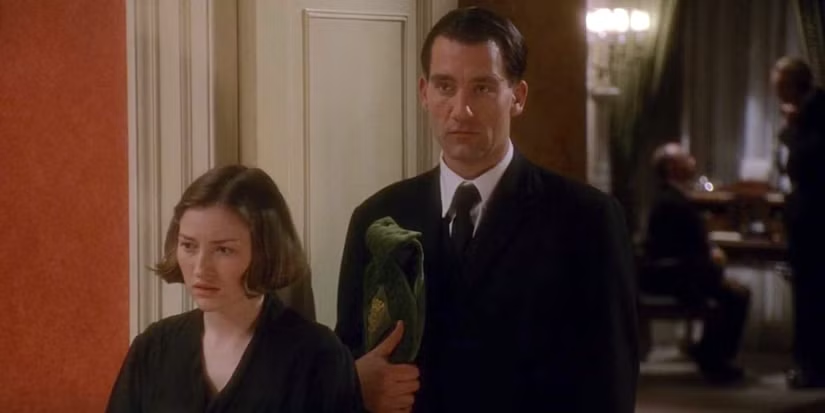
Robert Altman‘s Gosford Park is an Oscar-winning love letter to Jean Renoir‘s classic French film, The Rules of the Game, and features an outstanding ensemble cast of notable stars as well as a witty, cleverly constructed whodunit with real dramatic bite. The movie centers around several British aristocrats and their servants who travel to a countryside estate for the weekend, where their plans of relaxation and fun turn into a hunt for a killer after their gracious host is found murdered.
Altman’s roaming camera and layered soundscape make you feel like an eavesdropper, catching fragments of gossip from both social classes that matter more than they first appear, making Gosford Park one of the best upstairs-downstairs movies. The ensemble cast, including Maggie Smith, Helen Mirren, Michael Gambon, and Clive Owen, delivers uniformly superb performances, while Stephen Fry’s bumbling Inspector Thompson gently parodies the genre’s detective tradition. Part Agatha Christie homage, part social satire, Gosford Park respects the whodunit’s pleasures while expanding what the form can say, making it an intriguing puzzle with real emotional and intellectual weight.
8
‘Death on the Nile’ (1978)
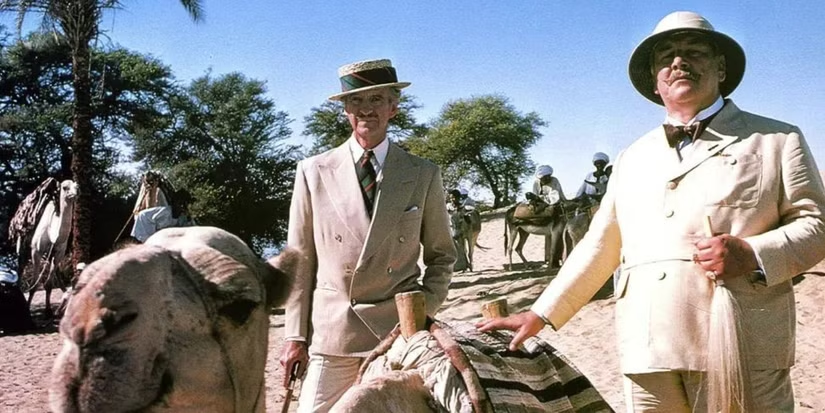
John Guillermin’s Oscar-winning classic Death on the Nile is a glittering, sun-soaked whodunit that proves Agatha Christie’s formula thrives with the right cast and setting. Aboard a luxurious steamer cruising Egypt, the famous Belgian detective, Hercule Poirot (Peter Ustinov), must solve the shocking murder of an heiress, Linnet Doyle (Lois Chiles), who is shot dead during her honeymoon, and nearly everyone aboard had reason to want her gone, most notably the jilted Jacqueline de Bellefort (Mia Farrow), who has been stalking the newlyweds.
Ustinov brings warmth and wry humor to Christie’s famous sleuth, while Anthony Shaffer’s screenplay preserves the novel’s ingenious plotting. The solution depends on precise timing, misdirection, and a deception that few viewers spot, yet it feels fair on a second viewing. The suspects are a showcase of acting royalty, including David Niven, Bette Davis, George Kennedy, and Angela Lansbury, who each deliver showstopping performances. Between its collection of familiar faces and its alluring murder mystery shrouded in scandal, Death on the Nile is a murderously clever and gorgeously mounted whodunit that remains a benchmark for the all-star mystery, and is a must-see for any fan of the genre.
7
‘The Last of Sheila’ (1973)
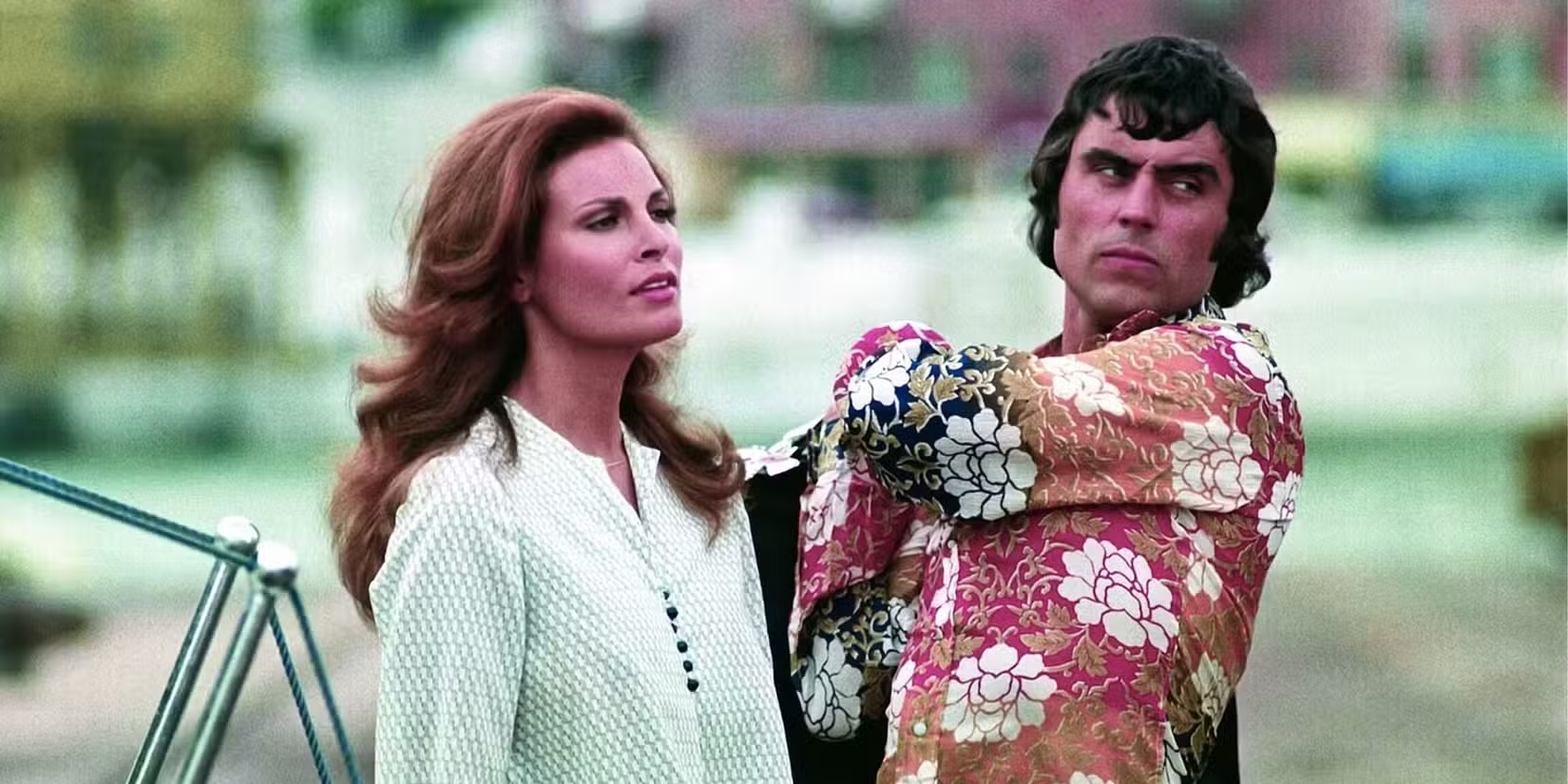
The Last of Sheila is a perfect whodunit written by Anthony Perkins and Stephen Sondheim, who famously staged elaborate scavenger hunts and murder games for their Hollywood friends, turning their real-life pastime into a razor-sharp mystery. A year after his wife was killed in a hit-and-run, a Hollywood producer, Clinton Green (James Coburn), invites six friends to spend the week doing an elaborate scavenger hunt while aboard his yacht. As each guest receives a card bearing a secret, one by one the secrets are uncovered, and the clues begin to point toward real guilt.
What truly sets The Last of Sheila apart from other classic whodunits is its intricate plotting and the script’s insider wit about Hollywood phoniness, which adds bite. Herbert Ross directs with glossy, sun-drenched menace, and the cast is a delicious collection of acid-tongued egos including Raquel Welch, James Mason, Dyan Cannon, and Ian McShane, who all engage in a bitchy, quotable banter that makes the film as funny as it is twisty. Decades before Clue and Knives Out, The Last of Sheila stood as the prime example of how a whodunit could be both a brilliant game and a savage comedy, deeming it to be a significant contribution to the genre.
6
‘Knives Out’ (2019)
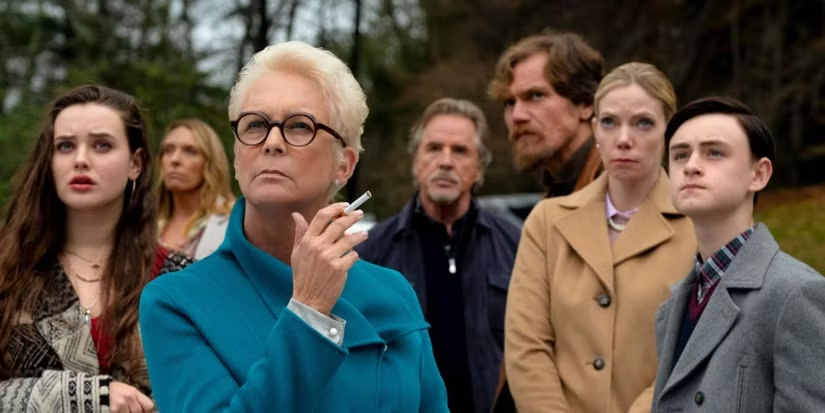
Rian Johnson‘s hit Knives Out undeniably revitalized the whodunit for a new generation of fans and did so by honoring the rules of the genre while gleefully bending them. Daniel Craig stars as a master detective, Benoit Blanc, who investigates the recent death of a wealthy crime novelist, Harlan Thrombey (Christopher Plummer), who is found dead after celebrating his 85th birthday. As Blanc sits down with Thrombey’s extensive family of eccentric relatives, each of them proves to be a potential suspect with something to hide or something to gain.
Rather than withholding the truth until the final scene, Johnson reveals the central secret early and then builds suspense from a different question: will the guilty party be caught? That inversion keeps the story fresh while still delivering the satisfying twists that fans expect, and nearly every clue pays off on rewatch. The entire cast is irresistible, notably Ana de Armas, who anchors the film with real heart as the kind-hearted nurse Marta, while Jamie Lee Curtis, Chris Evans, Toni Collette, and Michael Shannon make the Thrombey clan deliciously awful. Funny, stylish, and genuinely clever, Knives Out stands proudly beside Christie’s classics while feeling entirely modern and original.
5
‘Clue’ (1985)
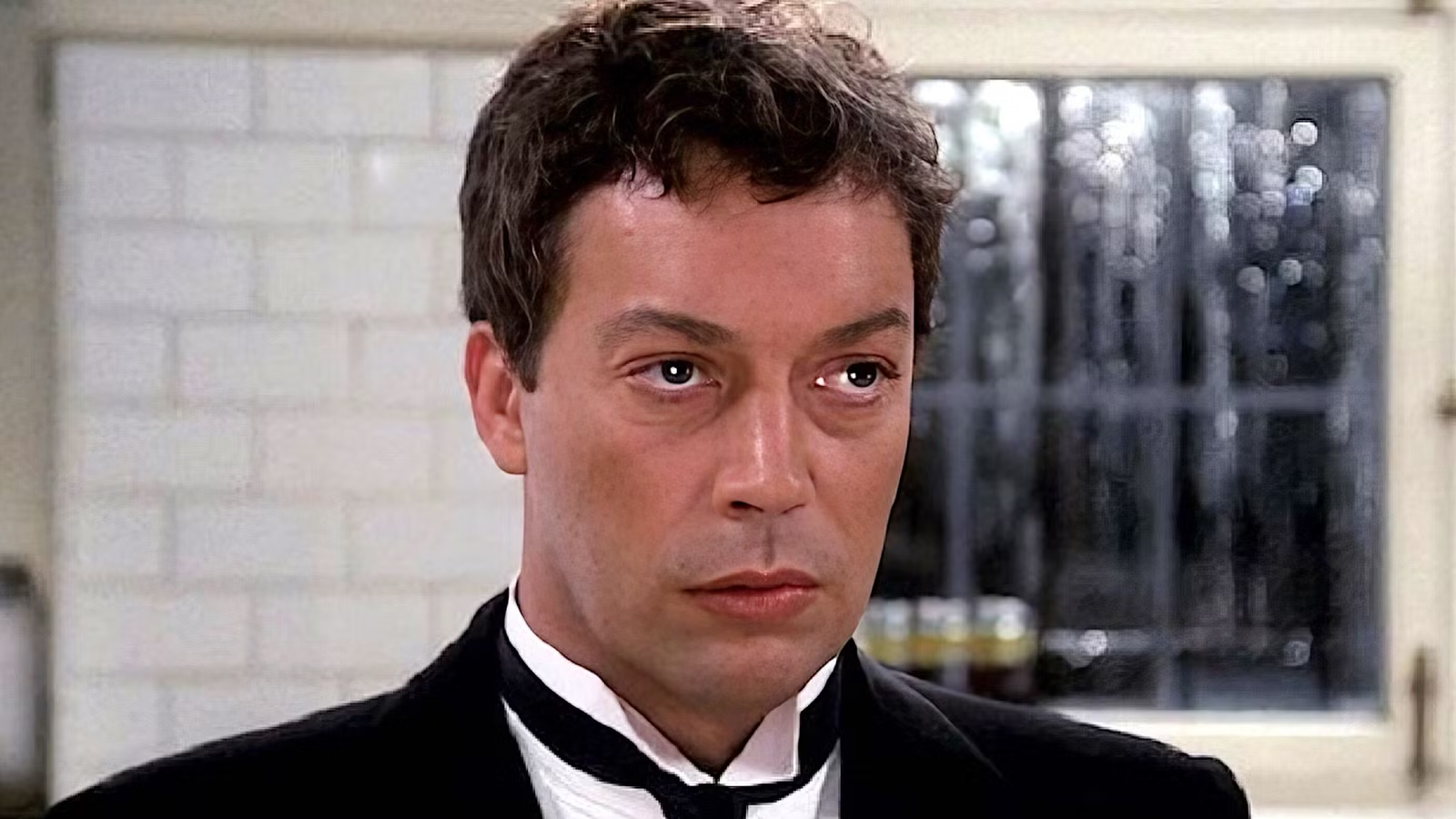
Instead of borrowing from the pages of great writers, director and screenwriter Jonathan Lynn took the popular board game, Clue, and, with no established story, turned it into one of the most gleefully inventive whodunit mysteries ever made. Set during a stormy night in 1954, six blackmailed guests arrive at a New England mansion for a dinner party hosted by the mysterious Mr. Boddy. When their questionable host turns up dead, the butler, Wadsworth (Tim Curry), leads them on a frantic search through the house as the body count keeps climbing.
The film’s boldest stroke is its trio of endings, which parody the genre’s tradition of the grand explanation while delivering a satisfying solution. Each version recasts earlier scenes, and the screenplay’s tight plotting makes the whole madcap structure feel fair. The comedic ensemble is a dream as Curry’s wired, fast-talking Wadsworth establishes the chaos, while Madeline Kahn, Eileen Brennan, Martin Mull, Michael McKean, Christopher Lloyd, and Lesley Ann Warren all land unforgettable moments. Despite being an initial flop at the box office, Clue has since become a beloved cult classic celebrated for treating the whodunit as both a genuine puzzle and a wild, farcical romp.
COLLIDER
The Mystery Desk
Case File 0481 · Open
Collider/
Movies/
Mystery/
Which Classic Mystery Movie Are You
4
‘Laura’ (1944)
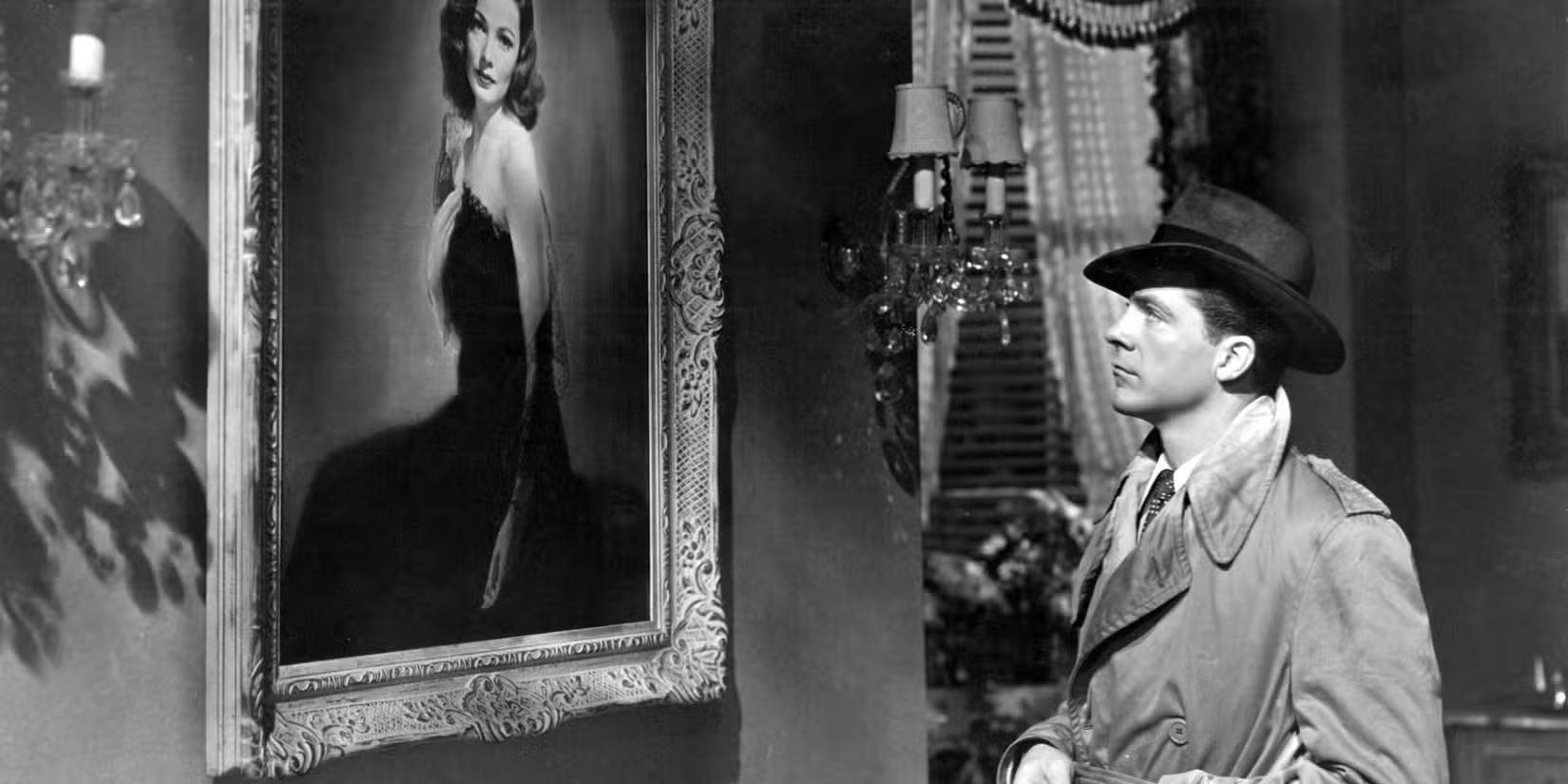
Otto Preminger’s noir classic Laura is a haunting whodunit that begins as a traditional murder mystery and gradually turns into a fascinating character study of obsession, control, and deception. Dana Andrews stars as a homicide detective, Mark McPherson, investigating the recent murder of an advertising executive, Laura Hunt (Gene Tierney), who was brutally gunned down in her home. As McPherson talks to Hunt’s friends and associates, he finds himself falling hopelessly in love with the beautiful victim.
Laura is widely known for its mid-way plot twist, which upends everything and reframes the second half of the mystery with an unexpected cleverness, ultimately setting it apart from other classic whodunits. The suspects in Laura are a wonderfully poisonous lot, notably Clifton Webb, whose performance as the caddy but elegant columnist and Laura’s mentor, Waldo Lydecker, earned him an Academy Award nomination for Best Supporting Actor. Joseph LaShelle‘s Oscar-winning cinematography immerses audiences in an almost beautiful nightmare, while David Raksin sets the tone of a dreamlike atmosphere with his sweeping score, which has since become one of the most recognizable film melodies ever written.
3
‘The Thin Man’ (1934)
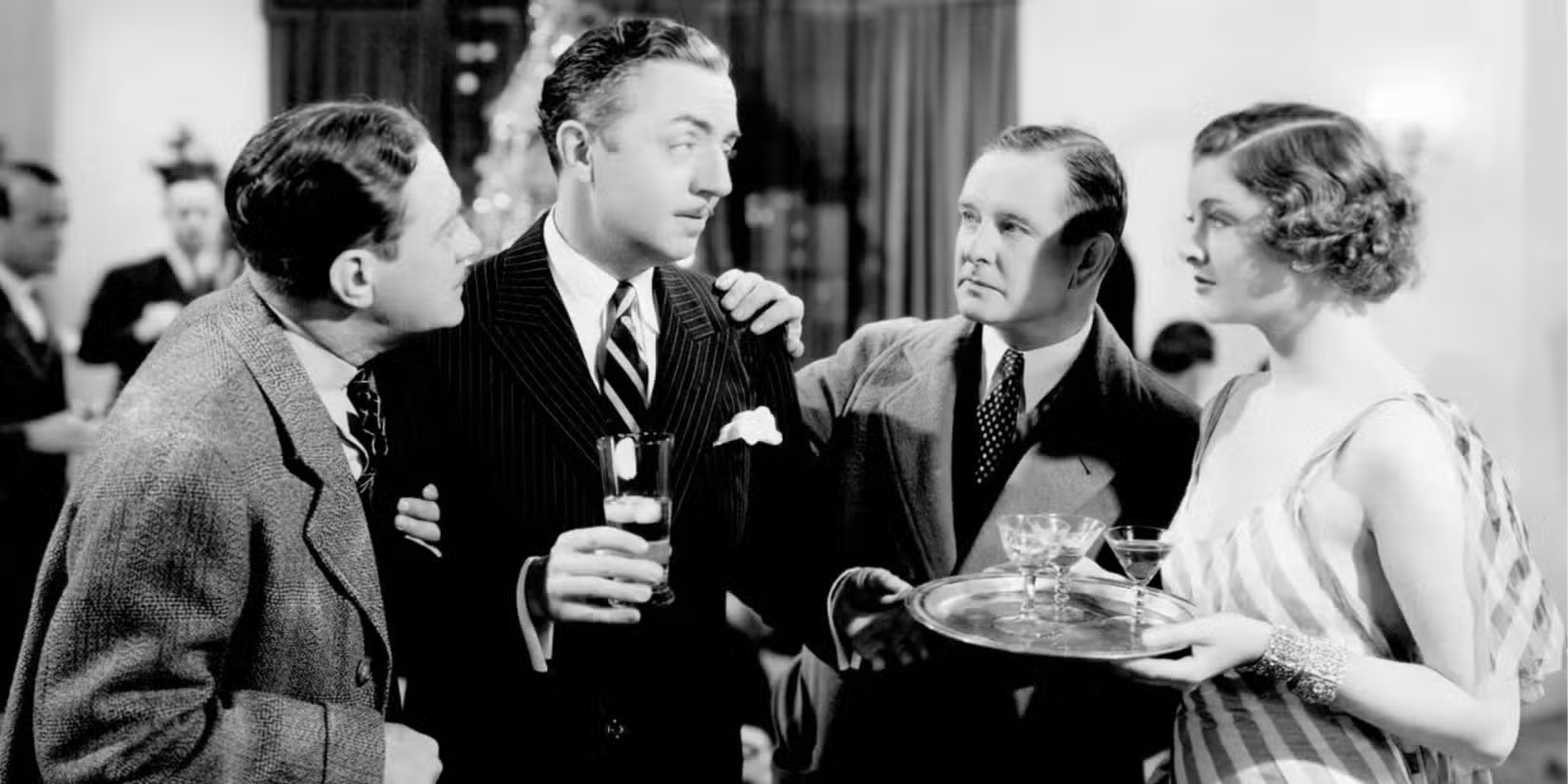
W. S. Van Dyke’s pre-Code comedy mystery The Thin Man is the film that ultimately proved a whodunit could be as much about the detectives as the crime itself, making it a landmark entry in the film genre. Adapted from Dashiell Hammett’s novel, the movie follows William Powell as a retired private eye, Nick Charles, who is dragged back into sleuthing when an eccentric inventor, Clyde Wynant (Edward Ellis), vanishes, and his former secretary is found murdered. While Charles would rather be drinking, his wife, Nora (Myrna Loy), is thrilled by the prospect of a real case.
The mystery itself in The Thin Man is deliciously tangled, but Nick and Nora Charles are the film’s secret weapon. Powell and Loy, who starred in thirteen movies together, have effortless chemistry, trading quips over cocktails with a playful affection that was revolutionary for its time. Their banter not only makes the film endlessly rewatchable, but it also set the template for the witty, happily married sleuthing couple who have been imitated ever since. Albert Hackett and Frances Goodrich‘s screenplay keeps the clues moving at a breezy pace, while the finale, a dinner party where Nick gathers everyone to expose the killer, is a classic quality of the quintessential whodunit. Smart, sophisticated, and consistently funny, The Thin Man spawned a slew of hit sequels and, even decades later, remains an undisputed landmark of the genre.
2
‘Witness for the Prosecution’ (1957)
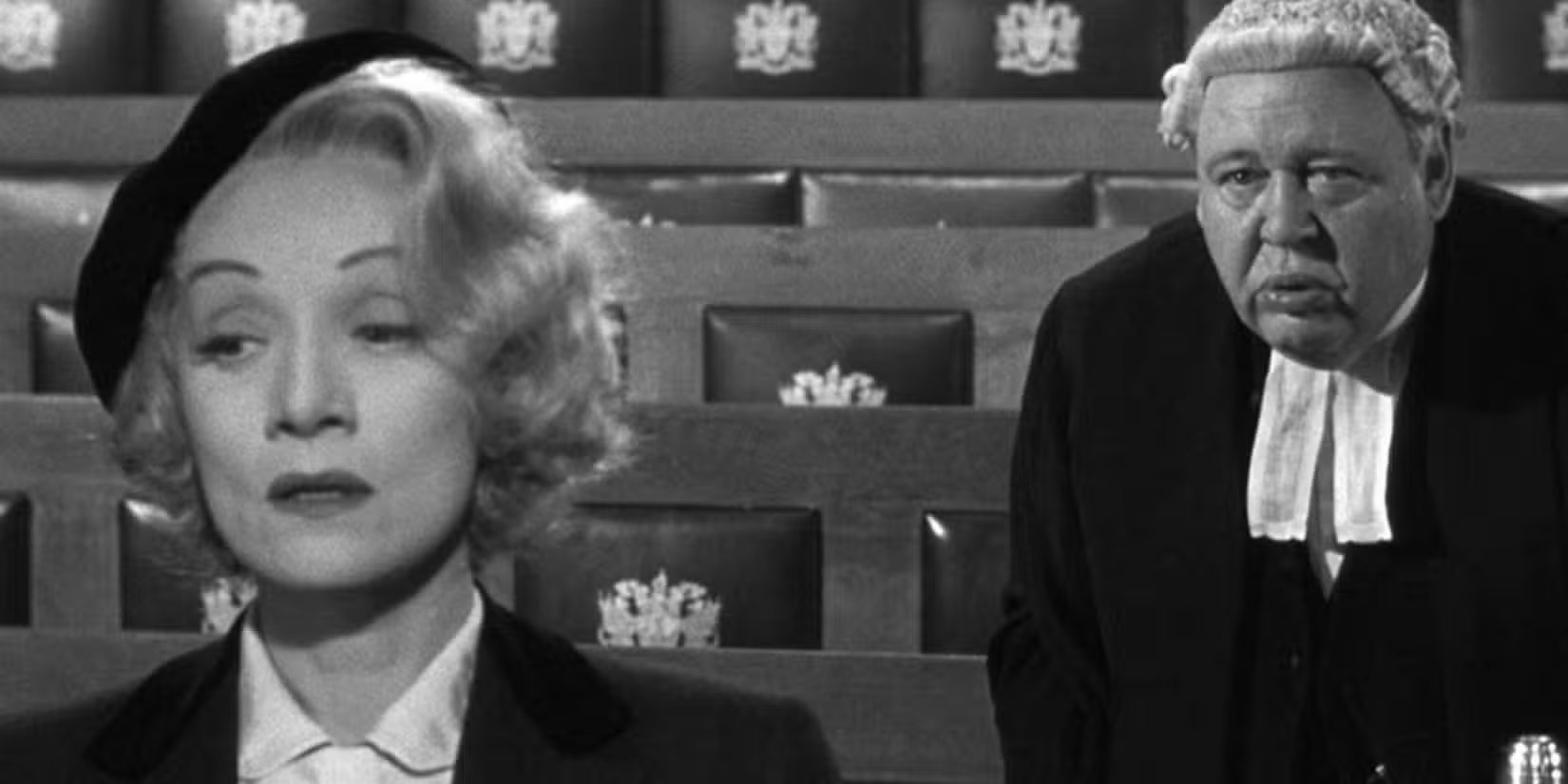
Billy Wilder’s Oscar-nominated classic Witness for the Prosecution is a courtroom whodunit adapted from Agatha Christie’s play of the same name that builds up to one of the most celebrated twist endings in film history. The movie follows ailing barrister Sir Wilfrid Robarts (Charles Laughton), who takes on the defense of Leonard Vole (Tyrone Power), accused of murdering a wealthy widow who had named him in her will. The case looks grim until Vole’s German wife, Christine (Marlene Dietrich), is called to testify against him, turning a seemingly open-and-shut case into a labyrinth of a mystery.
The film’s brilliance lies in how it turns the courtroom into a stage for misdirection. Every cross-examination, every shift in testimony, feels like a clue, and Wilder’s script, co-written with Harry Kurnitz, keeps the audience second-guessing who is lying and why. The final reveal is so audacious that the film’s closing credits famously ask viewers not to spoil it. Laughton is magnificent as the cantankerous Sir Wilfrid, whose sparring with his nurse between scenes provides delicious comic relief. Power is slippery and charming as Vole, while Dietrich is mesmerizing, delivering a performance of cool, calculated ambiguity that steals the entire show.
1
‘Murder on the Orient Express’ (1974)
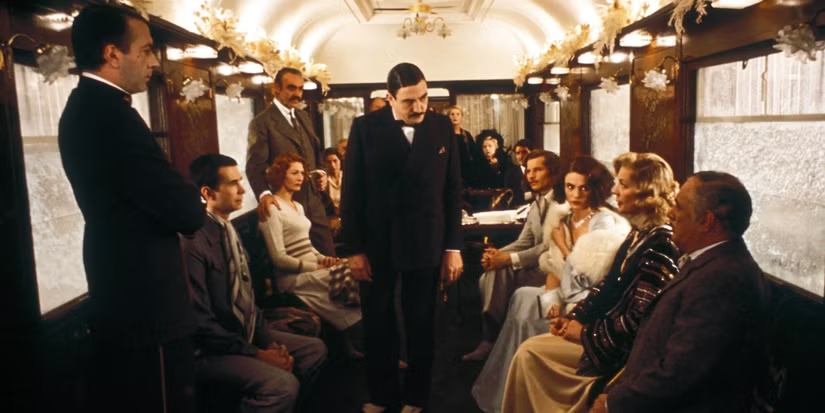
Sidney Lumet‘s adaptation of Agatha Christie’s famous novel, Murder on the Orient Express, is the gold standard of the classic whodunit, and ends with a twisted reveal that remains shocking and morally provocative decades later. Stranded by a snowdrift in 1935, the luxurious train becomes a sealed room where the notorious Belgian detective, Hercule Poirot, played by Albert Finney, must unravel the stabbing of an unpopular businessman, Edward Rachett (Richard Widmark), whose past hides a terrible secret.
The film’s greatest asset is its dazzling ensemble. Ingrid Bergman won an Oscar for her small but unforgettable turn, while Lauren Bacall, Sean Connery, Vanessa Redgrave, and Anthony Perkins fill every compartment with star power. Finney’s fastidious, theatrical Poirot, buried under heavy makeup and a fussy accent, is a delight and earned him an Oscar nomination, making him the only actor to receive a nomination as Christie’s infamous detective. Entertaining, handsomely crafted, and endlessly rewatchable, Murder on the Orient Express is a landmark murder mystery that set the template for every star-studded whodunit that followed, essentially solidifying its place at the top of the list.
