 Skip to content
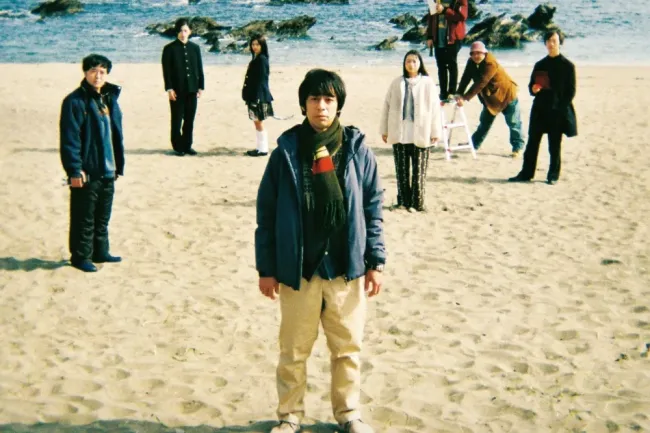
It’s an irresistible proposition for cinema: Take a TikTok series, turn it into a feature film, and present it at a major international film festival. But that’s exactly what happened with “Earthlings in Love,” the latest project from Japanese director Shinichiro Ueda. This is the first so-called “microdrama” (also known as “vertical drama”) that premiered at the Tokyo International Film Festival, an unusual choice because in Japan, as abroad, these short-form videos are designed for casual viewing on smartphones, not the formal feel of a film festival. “Earthlings in Love” was first released in 30 parts on social media, then returned for its TIFF debut; this version is considerably longer, going from a 76-minute running time to a 102-minute one. It is also – and this is crucial – much better than anyone would expect, because it is original.
It’s not really surprising that Ueda would be especially open about working in a new media format: His “One Cut of the Dead” took off internationally largely because of his inventive approach to low-budget storytelling. “Earthlings in Love” is similar in that it takes its limitations and turns them into strengths, thoughtfully incorporating the vertical video format into both its mise en scene and its structure. It would be silly to say that you forget about the frame after a while – I certainly didn’t – but Ueda makes the most of the tight 9:16 ratio, shooting dialogue shots from the center up and making shots so that they move the eye up rather than across the frame.
Even more clever is the way Ueda, who also wrote the script, incorporates a sense of claustrophobic disconnection into the story itself. This is a film about selective memory, based on a forty-something film director named Shinpei (Kato Shinsuke) whose career was prematurely cut short by early-onset depression. Returning to his hometown for the funeral of an old classmate, Shinpei tries to remember why he and his friends never finished their zero-budget high school sci-fi project, “Earthlings in Love”. Shinpei remembers a dramatic classmate leaving the shoot because he felt the film was under him, and his secret crush motivated him to keep going. But is that what really happened?
That’s what we see in the first 20 minutes or so of the film, as Ueda mixes “Rashomon” with “Eternal Sunshine of the Spotless Mind” by having Shinpei consult a service that offers to recover his memories by feeding photos and diary entries to an AI-generated recreation of the past. As we find out, the AI reflects Shinpei’s own faulty memories back to him; Ueda insists that this is not a statement about AI per se, but he notes the way LLMs create feedback loops that have led to the pop-psychological phenomenon of AI psychosis. Luckily for him, Shinpei has Nagisa (Kiyose Yaeko), another former classmate he reconnected with on his trip back home, to keep him grounded in the present. Her role in Shinpei’s life is not clear at first, mainly because he still forgets where he knows her from. Over time, however, she becomes the saddest person in the story.
Like “One Cut,” the plot structure of “Earthlings in Love” is built on a series of surprising twists. This is where Ueda puts the “microdrama” format to its most ingenious use, revisiting moments we’ve already seen from new perspectives that reveal important pieces of information that were left out of the previous frame. Simply by panning a few feet to the left or right, Ueda can completely change the film’s narrative and stakes. And the way he uses this method feels new and truly innovative, not to mention organic to a new style of storytelling that could be misleading.
The story itself is not that new, following the themes of high school nostalgia and lost connections that are common in popular Japanese cinema. However, they get an earnest, if sometimes oversensitive, airing here thanks to Ueda’s personal connection to the material. The director was not diagnosed with Alzheimer’s, but was a prolific amateur filmmaker starting in high school, and the flashback scenes of “Earthlings in Love” are set in the year 2000, when Ueda was a sophomore in high school. The fact that this piece of ’00s nostalgia was made through a true 2020s filmmaking model is just further evidence of Udea’s casual formal brilliance.
These scenes aren’t the only ones that ring true, however, as Kato and Kyose successfully carry the plot through a shocking coincidence and into a three-hanky tearjerking. “Earthlings in Love” hurts a lot of things, chief among them the simple joy of creating something with your friends just for fun. Its main message is ironic, given the fragility of its first release: Human memories fade, but movies are forever. Now that it’s a proper movie, his life has a better chance of being extended.
Grade: B+
“Earthlings in Love” premiered at the 2026 Tokyo International Film Festival. It is currently seeking US distribution.
