 Skip to content
Remember “Roma”?
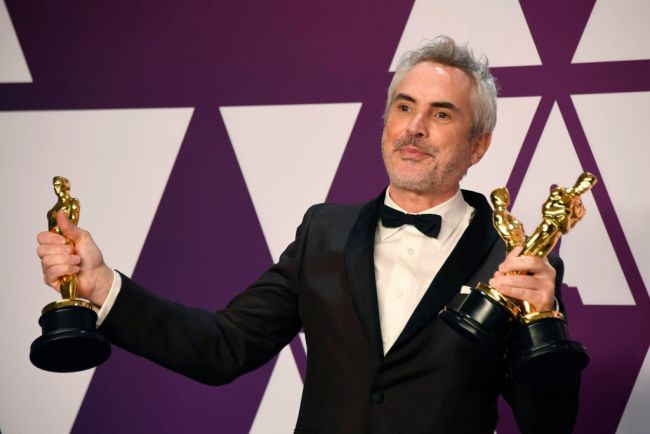
The black-and-white Mexican self-portrait of 2018 was the best picture with nine nominations, eventually winning three, including Best International Feature and two for director and cinematographer Alfonso Cuarón. Almost ten years ago, the Netflix streamer was poised to win the first Oscar for Best Picture.
But Academy voters were instead behind a popular, but less popular, film from Universal, Peter Farrelly’s “Green Book,” starring Mahershala Ali and Viggo Mortensen as a Black musician and his driver traveling south. In that award season, the disdain towards Netflix was evident. Academy governor Steven Spielberg backed “Green Book” behind the scenes and said Netflix’s movies should deserve Emmys and not Oscars.

At the Governor’s Ball after the Oscars, there was a sense of relief.
Year after year, Netflix’s crack awards team has racked up multiple nominations, only to lose out on Best Picture. Since 2019, nine films have lost that golden statue, including Martin Scorsese’s “The Irishman”, Jane Campion’s “The Power of the Dog” and Jacques Audiard’s “Emilia Pérez”, who were hit by the scandal. Netflix’s two Best Picture nods last year, period narratives “Train Dreams” and “Frankenstein,” were beaten by Warner Bros.’ Paul Thomas Anderson’s “One Battle After Another.”
For some time, many Hollywood players have been negative about Netflix, mainly because of the widespread belief that Netflix Co-CEO Ted Sarandos was out to kill theaters. Over time, he has tried to express his love of cinema, along with his preference for the streaming model rather than theater.
This year, after Netflix merged the Warner Bros. lose and lose, the mood within the industry changed. As a result of Sarandos’ learning experience looking under the hood at Warners numbers, he has made a definite U-turn to accept a theatrical run – especially for the likely Oscar contenders.
Why? There is money to be made. Filmmakers to be frustrated. And Oscars to win.
This weekend marks the beginning of that pivot, as Javier Calvó and Javier Ambrossi’s (Los Javis) $17 million Best Director-winning gay “La Bola Negra” hits theaters in New York and Los Angeles on October 16.
This isn’t a “Knives Out” theater stunt or a post-Netflix “KPop Demon Hunters.” This is the first time that Netflix not only fully reports box office numbers, but supports the distribution of a traditional platform on the way – such as A24 or Sony Pictures Classics – distributed to four theaters and expanding to six to ten, then 30 in the third week.
By November 6, the film will be playing in more than 75 markets. Of course, playability will determine how widely it goes until it hits Netflix on December 2nd. If theaters still want to play it, they can.

Coming off warm performances at the fall festivals, including Toronto’s People’s Choice Award, “La Bola Negra” has momentum. It will be at the top of the voter screening stacks. Not only does it lead in the International Feature race, but it has nods at Best Picture, Director, Adapted Screenplay, Score, Song, Supporting Actor and Actress, as well as craft nominations. It could land 9 or ten knots. (Now that Oscar rules allow two nominations for one actor in a category, Penélope Cruz could receive nominations for both “The Invite” and “La Bola Negra.”)
The film is breaking box office records in Spain, climbing week after week.
Netflix has other fish to fry this year. Korea’s Oscar entry, Lee Chang-dong’s Silver Bear-winning “Possible Love,” also topped the fall festivities and is in the running for International, Picture, and best actress for Jeon Do-yeon. Year-end critics groups are likely to give it some love.
The two Netflix titles appear in the international category with Neon’s Palme d’Or winner “Fjord” and “All of a Sudden” and MUBI’s “Fatherland” and “Minotaur”. The shortlist of 15 is the first stop, which was announced on 15 December.

Where the Quentin Tarantino series directed by David Fincher and directed by writing “The Further Mis-Adventures of Cliff Booth”, with Brad Pitt, ends up with Oscar voters, is anyone’s guess. While Fincher has been tinkering in the editing room, Netflix has confirmed the IMAX special will run for two weeks starting on November 25, 2026, ahead of its December 23 streaming date.
Let’s see if Netflix succeeds a little better with Oscar winners this year. The tide, it seems, may have turned.
