 Skip to content
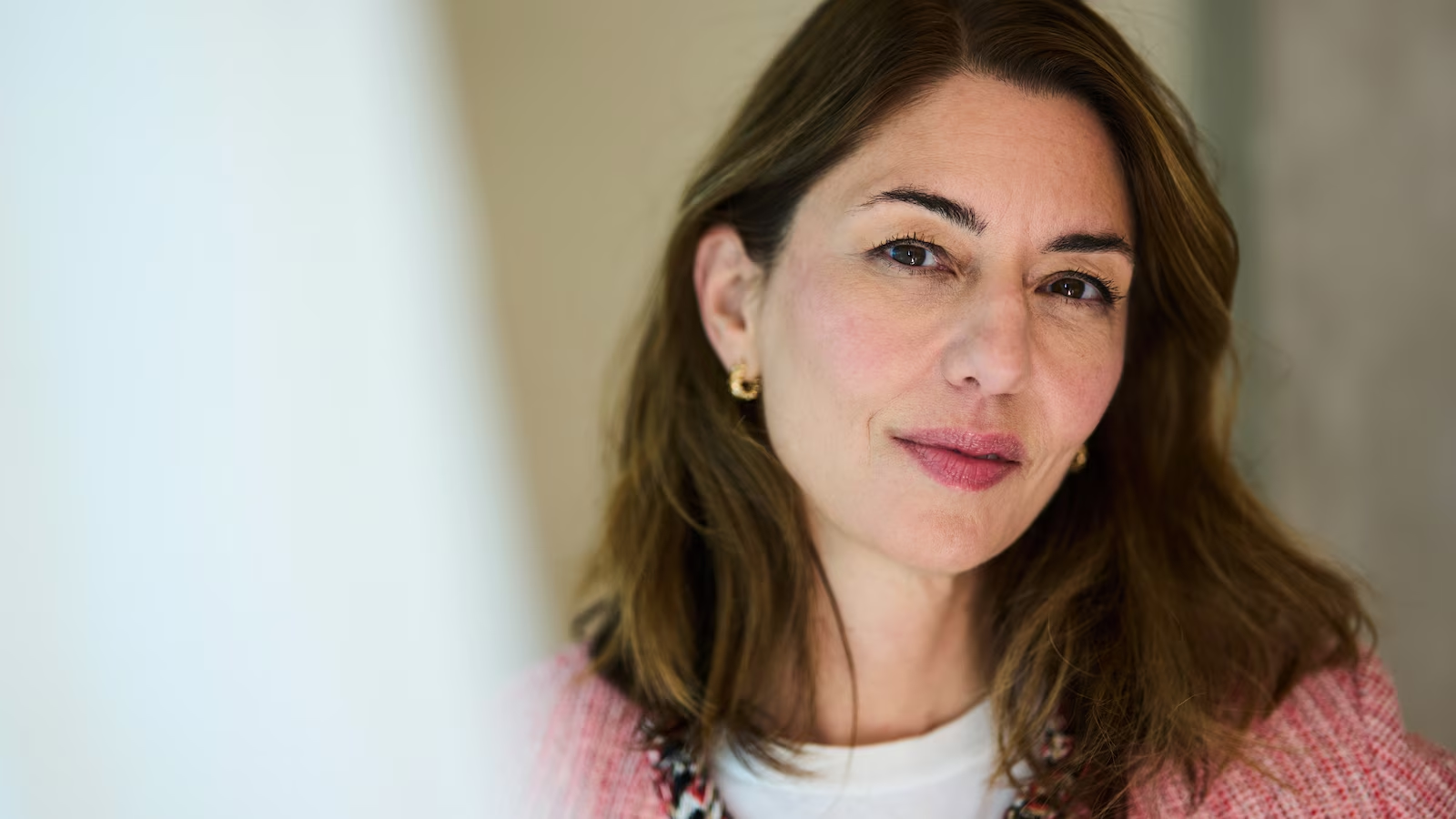
In 2005, Eleanor Coppola shot 80 hours of behind-the-scenes footage while making “Marie Antoinette.” This was the third feature of her daughter Sofia Coppola and a very ambitious one at that time, with unique access to Versailles, a budget of $ 40 million and 57 shooting days on the schedule.
Although Eleanor had made one of the best documentaries about the filmmaking process in “Hearts of Darkness: A Filmmaker’s Apocalypse”, capturing the chaos of her husband Francis Ford Coppola’s film “Apocalypse Now”, she had not come to “Marie Antoinette” to make her own film. She was there to help capture moments for marketing.
“She liked to show how things are done,” Sofia told The Associated Press in a recent interview. “It was the truth of what was really going on behind it that always interested her.”
The release of the film came and went, and life moved on, but it bothered Eleanor that her work was never put together the way she wanted, that the beautiful clothes of Milena Canonero that she captured so lovingly were never celebrated. Then one day during the COVID-19 pandemic, Eleanor decided to revisit the film and began to dream a little more: Maybe there was something after all.
Although Eleanor would not live to see it completed, she was right: There was something. And Sofia could see it to completion: Marie Antoinette’s “Gives a clear and intimate view of the creative process, now playing in selected theaters. On November 6, it will be available to broadcast on Mubi.
“I’ve always loved Frederick Wiseman films that don’t have a plot. They’re just fly on the wall,” Sofia said. “And I thought, oh, maybe it’s good for the movie to just feel like he was on set. So that was the beginning.”
Eleanor and Sofia were concerned early on about the lack of drama. There was no “Hearts of Darkness” crisis. Sofia even finished “Marie Antoinette” on time and on budget.
“It’s like the other one from ‘Hearts of Darkness,'” said Sofia. “In a way it’s kind of a good look because that movie is so macho and masculine and it’s so feminine.”
And it is also true to what actually happened. Going through the film they find a collection of gems that Eleanor captured, including the first time she met Thomas Mars, Sofia’s boyfriend at the time, and the late Marianne Faithfull, in her beautiful costume, praising Eleanor’s films.
Before Eleanor died in April 2024, she told her daughter that she wanted this film to be finished and her book, “Two of Me: Notes on Living and Leaving”, published. And, while she was sad, Sofia, together with family friends and long-time colleagues, got to work to make her vision a reality.
“It was always kind of like finishing what she started,” Sofia said. “Like any documentary, I’ve learned, you shape it as you go along. It was the hardest part for me to be in. So, I would never in a million years think of showing footage of me being vulnerable.”
In one moment, she is sitting in a trailer with her mother and she is obviously worried that she is being filmed.
“Maybe I should take a break so I can come to a new set and not have a press junket in my trailer with my mom,” Sofia says.
Any mother and daughter, regardless of age, knows this type of interaction well. But that didn’t make it any easier to introduce.
“I’m like, oh, do we have to have that?” Sofia said. “It’s embarrassing that I’m irritable and snotty with my mom. But it’s true. So she would like that. I didn’t want it to be a puff piece. I wanted to show all sides of that experience because that’s what she was looking for.”
The film also shows Sofia learning in real time to prove herself on a big production.
“I hope that it will be helpful for people to see that there is an evolution of people because, you don’t just walk on the set and become an expert, as you have to find,” said Sofia. “And you have to do things your own way, and not always the way everyone else does it.”
While it was coming together, they realized they had Eleanor’s words from that time to draw on as well as journal entries that they could cover with the film. In the film, they are read by Diane Lane, an actress who has known the Coppolas since she was young, having appeared in many of Francis’ films dating back to “The Outsiders” and “Rumble Fish.” She also starred in Eleanor’s directorial debut, “Paris Can Wait”.
“She loved my mother very much,” Sofia said. “She knew her so well. So, she could convey my mother’s feelings to her.
“Marie Antoinette” had a rough entry into the world. It was infamously promoted at the Cannes Film Festival and went on to receive mixed reviews from a predominantly male group of critics, but there were some outliers.
In a four-star review, Roger Ebert wrote, “Every criticism I’ve read of this film would alter its fragile magic and reduce it to the level of an educational thriller. At the box office, it wasn’t a disaster, but it wasn’t a hit either, with around $60 million in worldwide ticket sales.” world.
But in the last 20 years, it has undergone a significant cultural reassessment. And so her 20th anniversary has become a big celebration, with “Making Marie Antoinette”, a 4K theatrical re-release of the film itself, a behind-the-scenes book with photos from her friend Andrew Durham and an exhibition at the Petit Trianon in the Palace of Versailles that runs through January.
But perhaps more importantly for Sofia, it is an opportunity to remind the world (or show) who her mother was as an artist and documentarian.
“It is such a great gift that she gave us this picture and that I got to spend this year grieving in this way,” said Sofia. “She had such a unique way of doing things and seeing the world.”
