 Skip to content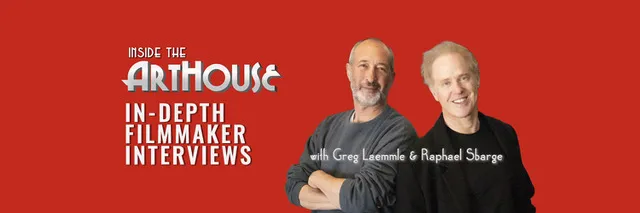
It’s a perennial question that movie theaters—especially local art house theaters—have dealt with long before the Internet: how do you engage with your audience? How do you get customers in the doors and into your seats and keep them coming back? And if not, do they not like your theater or the titles you show, or do they not know you exist or how to find it?
For Laemme Theaters president Greg Laemmle and filmmaker and actor Raphael Sbarge, that exact question followed them as they tried to expand the reach of their video podcast series “Inside the Arthouse,” a film interview show that hosts conversations with the filmmakers behind the small films playing in Laemmle’s own theaters and others like it across the country. The idea is to give arthouse patrons a way to cut through the noise and learn about the films they’re interested in.

But “Inside the Arthouse” faces the same challenge. Over two years, the podcast has grown to half a million subscribers on YouTube and over 5 million views. But they also want to know how to get their own show to cut through the noise of everything else on YouTube; reach the people who really care about independent film and art theaters; and then help the films, the filmmakers, and the industry reach the audiences that matter most. It’s important, because these are films that people need to be aware of through a wide range of means, and they’re not the types of films that usually end up on a stretcher down the line.
“The studios with their broader films can go back to their playbook, but India can’t, and we have to find ways to tell the audience what films are available and worth seeing,” Laemmle told IndieWire. “Some things have stepped into that gap, but they’re not necessarily for what was thought of as the traditional art house audience. That older audience that relied heavily on media coverage isn’t going on to Letterboxd. Not yet.”
IndieWire can reveal that “Inside the Arthouse” has partnered with Chronicle, an AI-driven data company, in hopes of better targeting the “Inside the Arthouse” audience and taking its reach and influence to the next level. Chronicle uses AI models to simulate audiences, analyze viewer behavior and interest, push more effectively to people on social, and then tailor that data so Laemmle and Sbarge can make decisions about how best to market and grow their podcast.
Laemmle and Sbarge have been working with Chronicle for two months now, and said the increase in engagement happened once Chronicle got under the hood “literally almost overnight.” They went beyond looking at impressions to instead analyze who spends the most time watching their show and where that audience comes from, and they’ve relied on Chronicle to get their show in front of those people more effectively than they had tried to do their own ads or merchandise sales to get the word out about “Inside the Arthouse.”
“What’s happened with Chronicle is that they’ve been able to, regardless of the technology they have, they’ve been able to find the audience and then bring it directly to them,” Sbarge said. “That’s why our watch hours are up. That’s why our watch time per episode is up. That’s why all the engagement metrics are up, and because in this case we’re not selling T-shirts or books. What we’re really trying to do is promote the work of these amazing artists. There’s a mission behind this.”
Chronicle was built on the idea that it was discovered and, whether it’s a YouTube podcast or a blockbuster blockbuster, it doesn’t matter how good your product is if your audience never sees it. They’ve seen how problematic Hollywood movie marketing can be, throwing tens of millions of dollars on a movie’s P&A budget only to watch it flop and discover that some people didn’t even know it existed. It’s a challenge that obviously exists on a micro scale as well for art house films and trying to find an audience that is passionate about them.
Founded by chief technical officer Aaron Sisto and former Fox and Bento Box boss Scott Greenberg, Chronicle starts by running a general model of “Inside the Arthouse”-like content on YouTube to identify demographic trends, consumption preferences, the works. It then builds a special AI model trained on the show itself to simulate audiences and gain a more precise sense of who is watching and why. Then instead of “buying a bunch of ads and just shooting them,” as Greenberg explained, they can send micro-targets of the show to specific users and feed their recommendation tools on social media.
They found that while there is a large overall audience of up to 111 million+ people who enjoy independent film that they are not completely tapped into, there are still pockets of people they didn’t expect that they can still push their content to. For example, they found that their performance was well divided even among age groups, not a predominantly older population, as some might expect. Their audience leans slightly more towards women than men, and is mostly in North America but with major pockets in Europe. They even found an alignment between Japanese anime fans sharing an interest in some of the same deep-dive film craft conversations that “Inside the Arthouse” usually explores.
“There’s a conventional wisdom that if you don’t have the volume of advertising dollars, you can’t buy awareness. Well, we think we can help solve that,” Greenberg said. “We can lower the barrier to entry to awareness. If you know what your audience is, you’re not flashing and praying; you’re more of a sniper getting in front of them. So give me my 1,000 real followers versus 100,000 meh followers. That’s where you can make virality less lightning in a bottle versus inevitable.”
All of this dictates how long episodes of “Inside the Arthouse” should be, who else they should host as a guest, and how they can tap into a more niche audience for things like anime or documentaries. It’s even beginning to shape how Laemmle thinks about possible live events in his venues for the podcast, which sponsors will follow, and how it could one day be combined with cable or a special streamer.
The good news is that he is seeing the enthusiasm and growth post-COVID back in art houses as well, and he says that even young audiences are receptive to repertory shows, event cinema, and newer art house voices. But there are still filmmakers and films he grew up with that he wants in his theaters as well.
“I want to get that audience back. We’re fighting. Maybe we’re fighting another battle, or we’re fighting a battle on two sides,” said Laemmle. “We certainly understand that there is a younger audience and make programs for them, but we want every quadrant back, and we all need a quadrant back to some degree.
