 Skip to content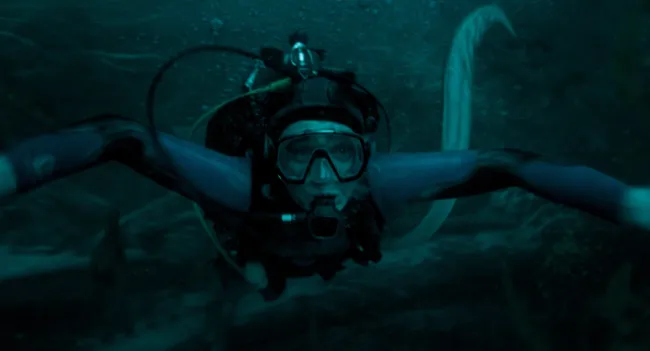
Writer/director Brian Duffield was scrolling through X (then still Twitter) a few years ago when he came across an interesting post from an author he followed, Daniel Kraus. The novelist tweeted that his next book, “Whalefall,” would tell the story of a scuba diver who is swallowed by a spooked whale and has only an hour of oxygen to keep him alive as he tries to escape—as a self-professed enthusiast for horror ideas, Duffield immediately noticed and contacted Kraus.
“We had never really talked to each other before, we were just two nerdy guys,” Duffield told IndieWire on an upcoming episode of the Filmmaker Toolkit podcast. Duffield stayed in touch with Kraus while the author finished his book, with both to read the story and gauge its potential as a source. Once Duffield read the novel, he knew he wanted to make the film. “I called him and basically said, ‘I’ll do anything to be a part of this, and I’ll be miserable if I do. do not be a part of it.”

Duffield and Kraus collaborated on the screenplay, which helped alleviate many of Duffield’s concerns about his own work. “Every step of the way, you’re with the man who gave birth to this thing, so I always knew where I stood in terms of making fun of it or not,” Duffield said. Even though the screenwriting process went smoothly, however, Duffield knew he had his work cut out for him when it came to making the amazing story believable on screen.
“I get excited about ideas that are ridiculous,” Duffield said. “A lot of my favorite movies are movies where, when you hear the concept, you roll your eyes, but in the end you’re really changed by it.” In an effort to convince audiences that his heroes’ struggles were actually possible, Duffield did extensive research with production designer Ramsey Avery and the visual effects team tasked with creating the whale’s stomach, communicating to as many whale experts as possible.
“It was a really fun and scary process trying to make it as realistic as possible, but then figuring out how to film something that naturally shouldn’t be filmed,” Duffield said. He and the team spent a lot of time watching things like autopsy videos and endoscopies. “There was a stranded sperm whale that they were flying [one of our advisers] in to do an autopsy before they had to remove him from the beach, and we watched that many times. “
Duffield also watched a video of an autopsy of a giant squid to find out how his main character reacts to a similar creature in the early stages of his nightmare. “Ramsey and I and the team were looking at that a lot, just trying to figure out how it would work,” said Duffield. He quickly realized that the key was to accept the true nature of the situation, but make the details as specific and realistic as possible.
“For us it was about leaning into it,” Duffield said. “There’s no way around guaranteeing the premise, and I think that’s the selling point. Our job was to put a lot of pressure on you with how real it is. So while there are obviously liberties that we’ve taken – usually for safety reasons – we wanted it to feel like this could happen to you. It probably won’t. But if a lot of things go wrong this could happen, and this movie’s guidebook.”
“Whalefall” opens in theaters on Friday, October 16. The Brian Duffield episode of Filmmaker Toolkit will air later this fall. To hear the whole conversation and make sure you don’t miss a single episode of Filmmaker Toolkit, subscribe to the podcast on Apple, Spotify, or your favorite podcast platform.
