 Skip to content
If there’s a theme lesson right now in the different paths franchises can take, and their varying degrees of success, it’s found in the year that “Avatar” is having. “Avatar: The Last Airbender” was a Nickelodeon Animation Studios project back in 2005, created by Michael Dante DiMartino and Bryan Konietzko, and being left out of the New York Times Best TV Shows of the 21st Century is so shocking that ten different friends yelled at me, who never worked there, about it.
(IndieWire would never make such a mistake).
The series ended in 2008 after three seasons (or “books,” as the show calls it) and a four-part finale that is one of, if not, the most unstructured series in television history, animated or otherwise. The style, influenced by the feeling of anime but very much shaped in bold line and color with the very different martial arts themes behind “bend.”

Many people can bend one of the four elements, of course, so they are called Earthbenders, Firebenders, Waterbenders, etc. The animation of the original series was directed by three studios in South Korea, primarily JM Animation in the early seasons and MOI Animation in the latter. The unified vision they all achieved was a unique kind of balance in itself.
“ATLA” could be as wild and imaginative and chaotic as its main character, Aang (Zach Tyler Eisen), the titular ultimate aviator, and his best friend, the sky-bison Appa (Dee Bradley Baker). He was also capable of soulful, luminous landscapes that made the show’s world, the “Four Nations,” feel incredibly complete and unique.
Much has been written, and rightly so for an unapologetically happy Asian and Native American series, about the impact on “The Last Airbender.” The Earth Kingdom is very high in the bureaucratic code of China, for example, while the Fire Nation touches on the sharp industry of Imperial Japan. But “ATLA” has had its own influence on the direction of animated series, too – from the visual emotion of something like “Blue Eye Samurai” to the amazing action of “Fullmetal Alchemist: Brotherhood,” to the deep friendships and tectonic character growth in shows like “She-Ra: Princesses of Power” or “Star Wars Rebels.”
All that doesn’t scratch the surface, not to mention the Secret Tunnels, of what makes “Avatar: The Last Airbender” great. Maybe that explains why people are trying to run back.
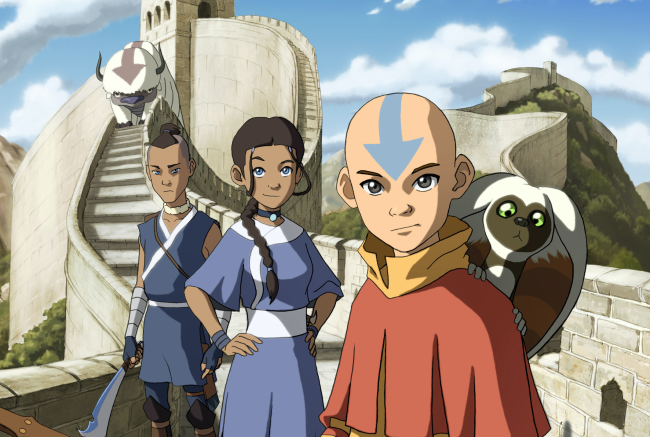
That’s M. Night Shyamalan’s “The Last Airbender” live-action film adaptation of the 2010 original, and the less said about that, the better. Netflix has tried a live-action series retelling chapter and verse of its animated predecessor, “Avatar: The Last Airbender,” and while Dallas Liu somehow found a way grow Prince Zuko, the show has also run into a number of problems similar to a live-action adaptation. This desire, which is understandable on its face, to make the design and beauty of the live-action world known is similar to the animated world. But animation is just much more expressive, so much more information can be conveyed through color and line size and boldness and the kind of unreal physicality that nevertheless conveys real emotion. A live-action project did not find ways to do the things that only animation can.
On the animated front, DiMartino and Konietzko first made a direct sequel, “The Legend of Korra,” which ran on Nickelodeon for 2012 to 2014 and focused on the Avatar directly after Aang, following the Water Tribe’s own himbo princess/Avatar Korra (Janet Varney) as an older teenager compared to the 12-year-old Aang. This is partly to account for a slightly older audience, who are already familiar with the original series, and also to make a really (free) horror movie joke in season 2.
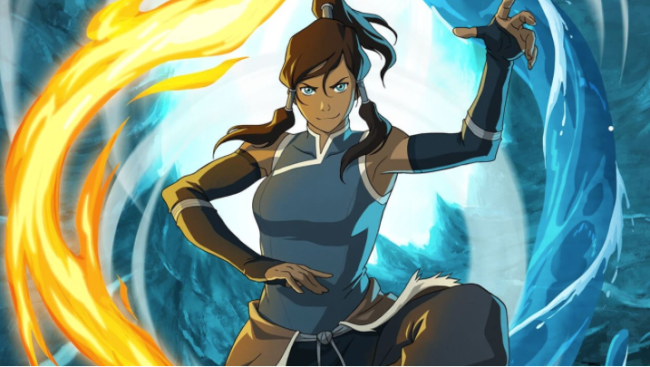
“Korra” builds complexity on the animation style of “ATLA,” which fits the main metropolitan setting of City City where the story takes place. Everything is a little more rivets and angles, a little less width. The animation is perhaps less careful and clear, relying more on weight and impact, and larger explosions that are in the intricate choreography of “Avatar.” But it feels very much like a companion piece.
Or he did, until the “Avatar” franchise started spinning off so many other franchises. Leaving aside the comics, tie-in books, video games, and other ancillary pleasures in taking advantage of a successful IP, there is, of course, the Netflix show. But in 2021, DiMartino and Konietzko spun off Avatar Studios, to manage the many, many other animated projects that still cling to the original tighter than a turtle’s claw.
It’s a sign of how Paramount + wants to go forward as the new Lion Turtle in Hollywood that there is a new animated film, which was released earlier this year, called “Avatar Aang: The Last Airbender,” which follows Aang who is now grown and tries valiantly to be more than a little fan service for adults who have now grown past the most interesting part of the Avatar story. There is also a spinoff dedicated to another previous Avatar, Kuruk, although “Avatar Kuruk: Wave of Chaos” may not include as many fucking monsters as Kuruk’s fur promised in a flashback.
Time and time again, the creative team behind the originals and newcomers have looked at “Avatar: The Last Airbender” and decided No to eliminate the Fire Lord of design, overall timing, focal characters, and tone. And as a result, none of these projects are as good as the original.
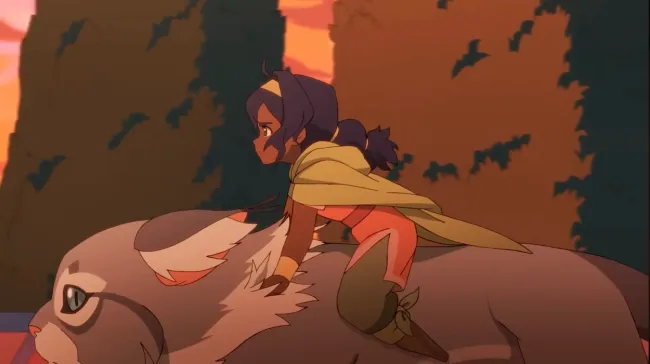
Not the latest effort set in the world of “ATLA,” at least not yet. But “Avatar: Seven Havens” is at least a breath of fresh air (irradiated, post-apocalyptic sandstorm-y) because it really gives itself the room to be its own thing in animation style, story framework, and themes.
Set hundreds of years after “Korra” in a world very different from the Four Nations we’ve come to know and love, “The Force Awakens” has a relationship with its predecessor series – young protagonists with cute animal flanks, a spin similar to the opening voice announcing each episode, big fights accompanied by children’s set pieces, and orthodox themes prepared. There’s a fun, yet-to-be-explained mystery about how Korra did or didn’t create a cataclysm that left most of the world uninhabitable, and a fun, yet-to-be-explained doubling of the number of Avatars in existence. But it gets away with hewing closely to the original in plot and tone because appearance different.
The animation of “Seven Havens” comes mainly from the French studio La Chouette Compagnie. While some colors and cultural touches in characters and fighting style still align with the original animated shows, much of “Seven Havens” is very different – to use a Ghibli analogy (Gibnalogy?), “Seven Havens” looks to “Nausicäa of the Valley of the Wind,” instead of the original’s look to “Totoro” or “Korra’s Castle’s Howl ship.”
On the one hand, the show’s eye for creative destruction and interesting critics and a kind of feeling of broken stained glass to the world outside Haven (one of the seven) in Ellora is just another reminder that “Scavengers Reign” looked very cool. On the other hand, however, by incorporating more Hindu and Jainist influences into Ellora’s design and re-interpreting those with the existing world of “ATLA,” “Seven Havens” feels like a real outgrowth of that world, rather than a pale shadow.
The show has already proven that doing something completely different may be the only way for a franchise like “Avatar” to survive.
The first three episodes of “Avatar: Seven Havens” are now streaming on Paramount +.
