 Skip to content
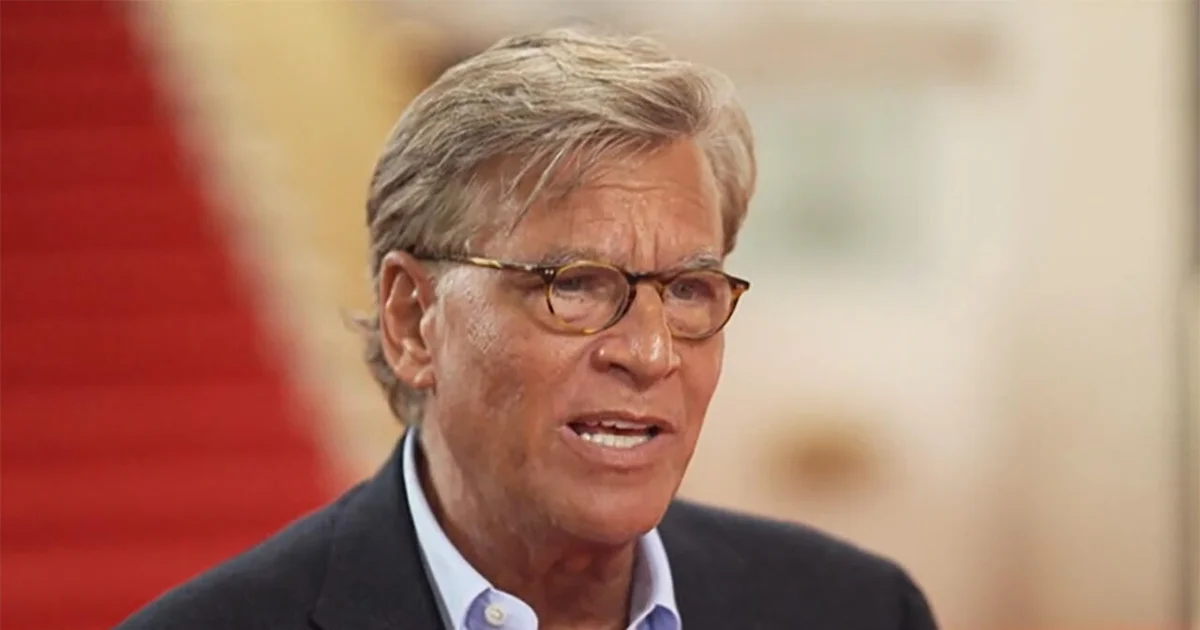
Aaron Sorkin offered his cure for writer’s block: “I like to drive around and listen to music, and I try to start arguments with myself, talking out loud. … You’re driving me crazy now!”
But, he said, that’s where some of the best ideas come from. “One out of every 50 times, and I’ll take those chances any day,” he said.
The odds paid off when Sorkin worked on “The Social Network.” Sorkin won an Oscar for screenwriting, and helped define Facebook CEO Mark Zuckerberg – and an entire industry – in the popular imagination.
Sixteen years later, Sorkin reflects on the unintended consequences.
“I remember talking to Jesse Eisenberg, who played Mark Zuckerberg in ‘The Social Network,’ and how annoyed he was that teenage boys were coming up to him; they wanted him to sign business cards saying, ‘I’m CEO, dude,’ like Mark had,” Sorkin said. “Jesse was saying, ‘Wait a second, these people think Mark is a hero in this story and he’s not a tragic hero.’
“Of course, I’m responsible,” Sorkin said. “It was not my intention.”
And that may be one reason why Sorkin revisits Facebook and Zuckerberg in “The Social Reckoning,” out this Friday.
Jeremy Strong plays the grown-up Zuckerberg, who is still awkward but far more powerful. The film is inspired by the true story of Facebook whistleblower Frances Haugen (played by Mikey Madison), who in 2021 released thousands of internal documents to Wall Street Journal reporter Jeff Horwitz (played by Jeremy Allen White).
Haugen still reflects on Facebook, and Zuckerberg. “When I look at Mark, I see a lot of things about his experience of the world as a tragedy,” she said. “Here is a person who came to power when he was 19 years old, surrounded by men for his entire adult life. He has been able to detach himself from consequences for 20 years.”
The consequences for the rest of us are shown in “The Social Reckoning”: disinfection, terrorism and division.
CBS News
Sorkin says Facebook investigated how and why his content was shared. “In 2018, engagement was going down, so they tweaked the algorithm,” he said. “That’s important because they knew, they had done a lot of research that shows that the things that are most likely to be redistributed are anything that makes you angry – anger bait. That’s what they did, and it worked.”
Set in Vancouver last July, we saw Sorkin (who is also directing the film) bring his rapid-fire dialogue to life. “I’m very nervous when there are no four walls,” he said. “I’ve written very few exterior scenes in my life. It’s mostly in rooms where people talk.”
When asked what he listens to when directing, Sorkin said, “Well, you used the word ‘listen,’ that’s what I do. I’m very aware of the music of the language. My parents started taking me to see plays starting when I was very little. And I loved the sound of the dialogue. A line of dialogue is just as important to me as what it means.”

CBS News
The film opens just as Sorkin’s first script, “A Few Good Men,” returns to Broadway. Made into the 1992 hit film, it also explores another large institution that wrestles with the truth. His most famous line – “You can’t handle the truth” – also applies directly to “The Social Reckoning.”
“I think the point is that you’re not getting the truth in ‘The Social Reckoning,'” Sorkin said. “I think we can handle the truth, but … you know what? I’m going to take that back. Maybe we are can’t manipulation of the truth, and that the reason that so many people believe things that are wrong, is that the lie is easier to believe.
“For example, you can tell people until you’re blue in the face that the undocumented immigrant population commits fewer crimes per capita than citizens; they won’t hear that. only to hear that immigrants are the cause of their problems,” he said.
Meta, Facebook’s parent company, declined to comment on the footage. It is repeatedly said that it works to stop the spread of dangerous or harmful content.

CBS News
The film arrives as Meta faces billions of dollars in settlements and rulings over claims that its platforms harmed the mental health of young users, with more cases heading to court. And with Meta now competing in AI, whistleblower Frances Haugen is concerned. “Many whistleblowers have come out of the Meta AI teams talking about the lack of safety,” she said. “I would pause before rushing to give Mark the level of power he’s trying to grab when it comes to AI.”
The power that Zuckerberg already wields is what kept Aaron Sorkin writing.
When asked what he would say to the Facebook co-founder if he had a moment with him face-to-face, Sorkin replied, “You want to make the world a better place? Don’t make the truth up for grabs. Don’t be indifferent to the truth. And he can do that.”
To watch a trailer for “The Social Reckoning” click on the video player below:
FROM THE ARCHIVES: Facebook and “The Social Network” (YouTube Video)
For more information:
Story produced by Dustin Stephens. Editor: Steven Tyler.
