 Skip to content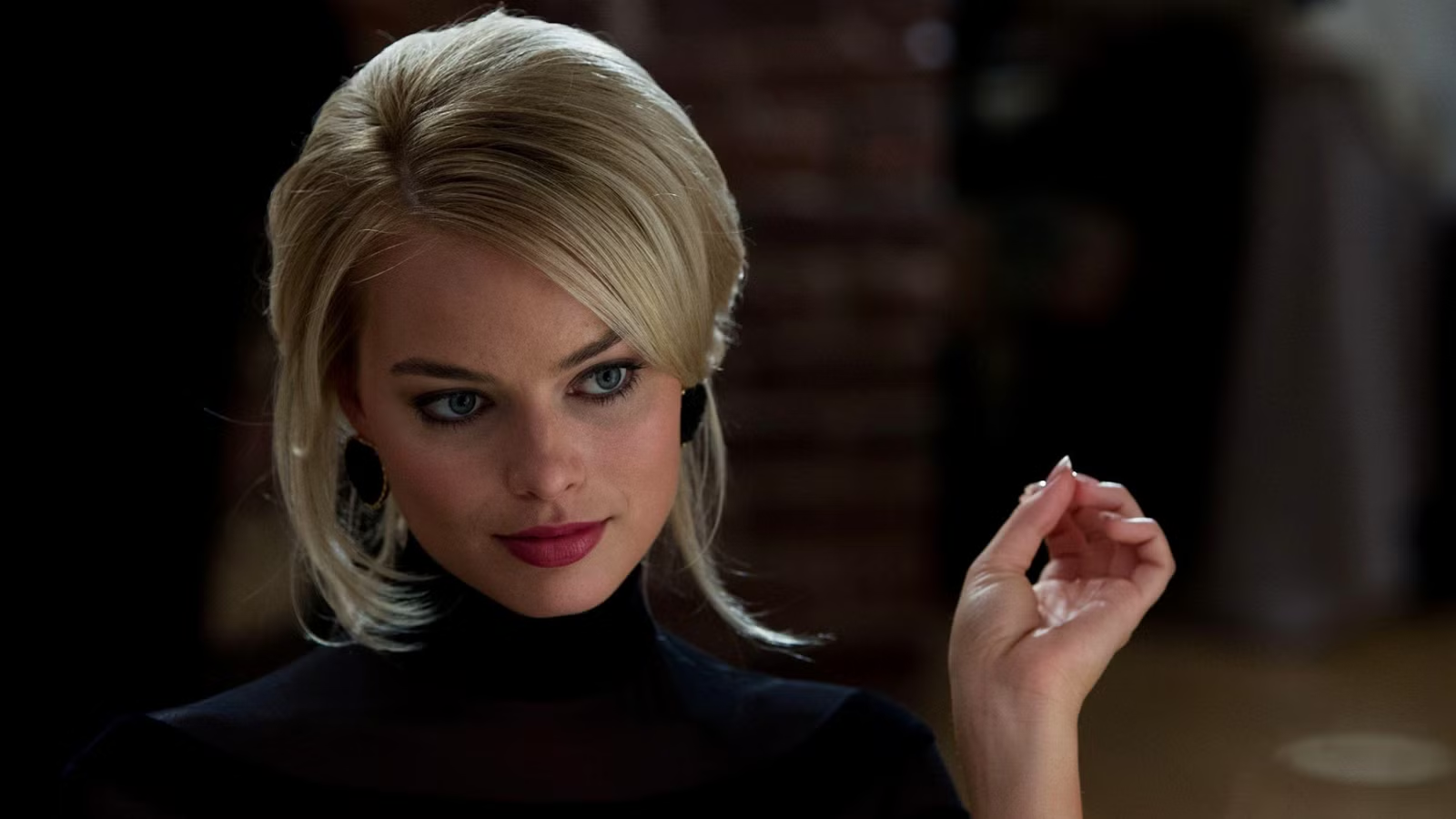
Martin Scorsese has made so many films based in the world of organized crime that it is almost necessary to identify the ones he has made do not appropriate to that environment. Movies like Goodfellas, Casinoand The Irishman tell the stories of real criminals in the mafia world, often telling their ambitions, insecurities, and desires in the words of the people involved. In 2013, he moved away from that subject to directing The Wolf of Wall Streetusing the template of his previous films to explore the world of white collar crime. The title is wolf Jordan Belfort (Leonardo DiCaprio).
Like Scorsese’s other crime films, the plot is not as important as the atmosphere and energy to be brought along for the ride. The arc is mostly true to the formula of Goodfellas and Casinowith a glorious and overwhelming journey to the top followed by a chilling fall from grace, marked by drug-induced paranoia and infidelity. But the other films had the violence of the mafia to power the stakes, with the threat of it lingering over every scene (usually with Joe Pesci involved). The Wolf of Wall Street based in the world of direct finance, where the violence is largely non-existent, apart from one scene in which a butler gets almost thrown off a roof. And in Scorsese’s film, the lack of violence also means a lack of consequences, and that is perhaps the most powerful and saddest thing about this film.
How ‘Wolf of Wall Street’ follows the path laid down by ‘Goodfellas’ and ‘Casino’

If the formula of Martin Scorsese’s other crime blockbusters was to break the wall using a combination of rock music, narration, and clever editing to sell the lifestyle of their antiheroes, Wolf do so at an even higher level. Henry’s Hill (Ray Liotta) from Goodfellas and Ace Rothstein (Robert De Niro) from Casino nostalgia, justification, and motivations were built into their every line of narration, but Belfort has little interest in getting you on his side. From the opening moments of the film, he sells the viewer on his lifestyle, talking about his mansion on Long Island, his beautiful wife, drug use, and drunken helicopter rides. It mostly plays like an infomercial compared to Scorsese’s previous films with the feel of a piece of memory or a disaster.
Scorsese’s crime dramas usually pair the protagonist with a best friend who enables the worst of the poor (with some bad ones of their own) and a misguided wife who can’t help but be drawn to the wealth and glamor of her lifestyle. In WolfDonnie Azoff (John’s Hillwho had dreamed of working with Scorsese) and Naomi (Margot Robbie in a leading role) play these parts. And as much as these films throw viewers into their lofty world with fascinating, detailed explanations of the inner workings of the crowd, Wolf you’d rather be bombarded with cold calls and grotesque office parties to celebrate successful milestones, cutting quickly from time to time to something that reveals the misery at the heart of the characters’ worldview.
‘Wolf of Wall Street’ is unhappy and unhappy
When The Wolf of Wall Street released in 2013, the biggest critical mark against him was his lack of empathy for Jordan Belfort’s victims, who were largely financially ruined by a con man to fund his hedonistic lifestyle. Like many of Scorsese’s previous films Killers of the Flower Moonthe people who suffer as a result of the criminal actions of the main characters are often shown off-screen, following the director’s belief: “Cinema is a matter of what’s in the frame and what’s out.” Belfort, Azoff, and the hilarious cast of pathetic cronies (including one who will never be better John Bernthal) bull fill of brokerage firm Stratton Oakmont what you see inside The Wolf of Wall Streetkeeping their scams running just long enough for the next orgy or line of cocaine. Victims included Wolf It doesn’t look like it because, from Stratton Oakmont’s perspective, they were.
Scorsese’s films are usually very disconcerting, with moments that seem romantic or nostalgic being immediately taken away by a sad truth about the characters. In Goodfellasthe slow dreamy wedding dance between Henry and Karen (Lorraine Bracco) followed by a marriage argument. Wolf does something similar, with the scene of Jordan’s humorous wedding gift of a yacht to Naomi cutting immediately to an argument about infidelity. For these characters, any emotional ties to their world are easily given up for the pursuit of material things and money, and despite how ugly that kind of thinking can be, the film is still endlessly entertaining, and one of Scorsese’s best.
