 Skip to content
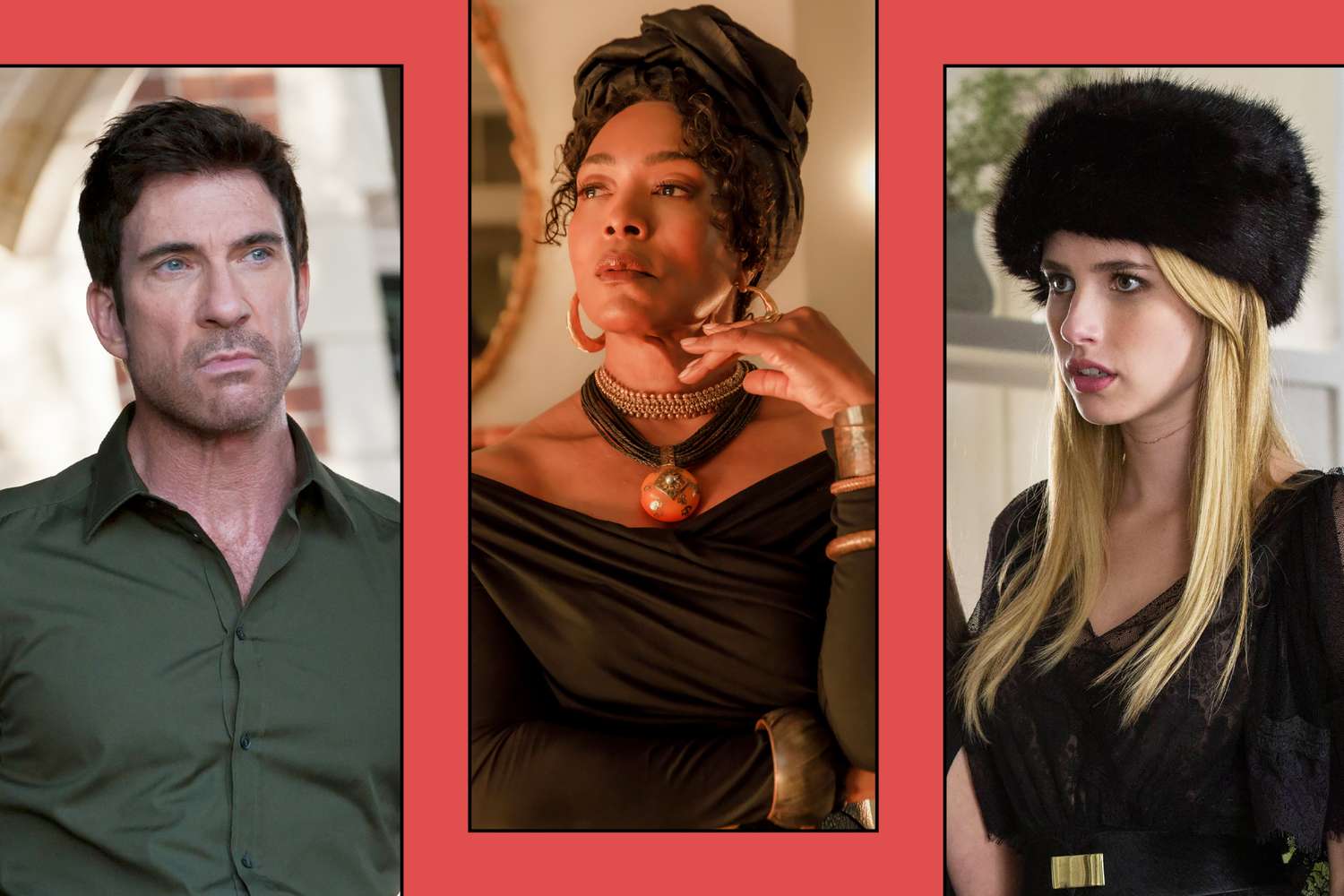
The world’s “a filthy goddamn horror show,” and American Horror Story made it must-see TV.
In October 2011, at the height of Glee, Ryan Murphy and Brad Falchuk debuted a horror series that helped popularize a new kind of anthology television, reinventing itself each season with a brand-new story, setting, and characters played by (mostly) familiar faces. Forsaking the standard one-and-done episode anthology format, AHS proved that audiences would stick around for season-long scares, even if the plotlines got gorier, weirder, and sometimes just plain worse.
Fifteen years later, the series continues to reimagine American histories and channel primal fears — from clowns and cults to witches and ghosts — with each installment cloaked in social commentary and camp. But let’s be real for a second: Not every season hits the same.
With season 13 having just wrapped up, bringing back familiar faces like Sarah Paulson and Jessica Lange, and a 14th season on the way, we’re ranking all 13 chapters of AHS, from those that should’ve stayed locked inside Briarcliff Manor to the season that remains the Supreme.
Season 13: 13 (2026)
Eric Liebowitz/FX
Unlucky is the number 13, as American Horror Story’s most recent (and, frankly, most egregiously awful) season proves in its execution, narrative themes, and horrifically messy screenwriting. Hinged on the idea that its titular numeral is cursed, AHS: 13 feels less like a structured narrative built around a compelling story and more like a sloppy, reverse-engineered excuse to reunite familiar stars, catchphrases, and self-references — all with the goal of making its target audience go, “Hey, I remember that!” every few minutes.
Sure, Jessica Lange returns in a leading capacity (as each of her prior marquee madams) for the first time since 2014’s Freak Show, but at what cost? Episodes are chopped down to between 20 and 30 minutes, so her fleeting moments of greatness have their wings clipped before they can soar. Nothing about its plot makes sense from the jump — something about the son of Satan rebelling against his father? — and all of its admittedly gifted stars appear to phone in halfhearted performances that, in fairness, match the energy of the season’s slapdash scripts.
At the end, we’re left with AHS: 13’s own self-fulfilling prophecy: Yes, No. 13 is cursed. But you didn’t need a season of television that’s worse than spending an eternity rubbing up against knotty pine to tell you that. —Joey Nolfi
Season 12: Delicate (2024)
Eric Liebowitz/FX
Fans wondered if American Horror Story could deliver a season without Ryan Murphy as showrunner. Turns out, it barely made it out of the womb. Based on Danielle Valentine’s Delicate Condition, the anthology’s 12th installment is essentially a Rosemary’s Baby dupe, following Anna Victoria Alcott (Emma Roberts), a Hollywood actress on an IVF journey who is convinced dark forces are after her unborn child.
Delicate veers far from the franchise’s roots — namely, horror. The season drew heavy criticism for its glacial pace and incoherent plotting, generating more Reddit theories than actual scares and leaving viewers more haunted by what could have been. While many fans now rank it as the franchise’s weakest season, it wasn’t a total bust: Kim Kardashian seemed fully in her element as cutthroat publicist Siobhan. (Whether you believed the performance or not, she was convincing enough to land a lead role in another Murphy project, All’s Fair.) —James Mercadante
Season 7: Cult (2017)
Frank Ockenfels/FX
Let’s be clear: Cult is utter chaos. It may be the best example of the trap Murphy-Falchuk collaborations too often fall into, conjuring plot points like arbitrary bingo numbers. Add in Cult‘s poor attempts at political satire, and you’ve got an anthology deep in an identity crisis.
Are we meant to focus on Ally Mayfair-Richards’ (Sarah Paulson) phobias being exacerbated by Hillary Clinton losing her presidential campaign; the tribe of killer clowns running suburban Michigan like the mafia; or Evan Peters‘ incel caricature rising to power in a local election? The ever-paranoid Ally believes all of these headscratchers are part of a Trumpian conspiracy that’s out to get her, but audiences were left struggling to connect the dots.
In the grand scheme of artistic social criticism made during the first Donald Trump administration, Cult is at the very bottom of the bucket. If Paulson’s meltdown about Merrick Garland wasn’t cringey enough, Peters coating his face in Cheeto dust and rattling off the President’s worst one-liners sure was. That said, Cult’s chaos is somewhat enjoyable if you stop trying to understand it and simply indulge. —Allaire Nuss
Season 10: Double Feature (2021)
FX
While we’re used to seeing AHS shake up its format, season 10’s Double Feature is a complete departure from the series’ norm. Like the back-to-back genre flicks in the days of drive-ins, this installment is split into two tales: Red Tide (“by the sea”) and Death Valley (“by the sand”). But what could have been an intricate, interwoven storytelling feat is instead one season’s worth of resources spread thin between separate and stale plotlines, much to the dismay of fans eager to see the season that Covid had delayed by a year.
Red Tide initially showed promise as a Shining-meets-Faust story about a struggling writer (Finn Wittrock) who, after relocating his family to an isolated coastal town, is offered a black pill that will bring him great creative success with terrifying side effects in the form of Salem’s Lot-style creatures. But a premature ending from the shortened episode scope ultimately made this compelling narrative fall flat.
To add insult to injury, Death Valley as a surface-level alien conspiracy in the Eisenhower era is far less interesting from its onset and deeply unsatisfying, being riddled with inconsistencies at every turn. And with no concrete connection between the two stories, why bother having a split season at all? —A.N.
Season 4: Freak Show (2014)
Michele K. Short/FX
Though it surpassed the ratings of the three critically acclaimed seasons before it, Freak Show starts strong but eventually loses steam. A not-so-subtle nod to the classic (and controversial) 1932 film Freaks, this season follows a ragtag group of “freak show” performers in 1950s Florida at the beck and call of a legless and domineering Jessica Lange in her final AHS lead role. Featuring Sarah Paulson as conjoined twins, Evan Peters as a four-fingered “Lobster Boy,” and Kathy Bates as a bearded lady, desperate times make the gang vulnerable to con artists and corrupt cops, but John Carroll Lynch as Twisty the Clown represents a new threat entirely.
Though not the worst the series has to offer, Freak Show‘s stellar cast wasn’t enough to save its flatlining plot, even with the reprisal of some Asylum characters. It’s not overtly insensitive like its source material, but having disabilities teeter on being a horror device is never a good look. Twisty, however, remains among the more iconic villains in AHS history. One look at his mangled, toothy mask, and it’s easy to see why. —A.N.
Season 5: Hotel (2015)
Prashant Gupta/FX
Even with a tried-and-true core cast, Hotel wins the superlative of being the first AHS anthology to go off the rails right at the onset. Though the series’ quality had been mutilated by the underwhelming end of Freak Show the previous year, Hotel‘s complete lack of a narrative anchor was one more knife in AHS‘ chest. Based on L.A.’s infamous Cecil Hotel — which has hosted all things macabre and murder since its opening in 1924 — this season may have taken its source material too seriously by touching on a great many violent mishaps instead of nurturing a core plot.
That’s not to say it’s completely directionless, though. At its (albeit splayed) center is Lady Gaga as a femme fatale vampiress with a thirst for revenge (winning a Golden Globe for the role), along with the evasive Ten Commandments Killer and Wes Bentley as a detective intent on piecing all of the hotel’s evils together. Still, the mid-season dinner party scene featuring the ghosts of famous serial killers remains one of the better creative liberties the show has ever taken. —A.N.
Season 11: NYC (2022)
FX
Centered around the spread of the AIDS virus in the 1980s, American Horror Story: NYC unfurls in a style that seems better suited to American Crime Story. Narratively cohesive — at least by AHS standards — and culturally significant, NYC begins with Patrick Read (Russell Tovey), a not out NYPD detective who’s investigating a string of serial murders of gay men around the city. Concomitantly, a scientist’s (Billie Lourd) research offers insight into the emergence of a new virus, which appears to be targeting the city’s marginalized communities. Also starring Denis O’Hare, Zachary Quinto, Sandra Bernhard, Isaac Powell, and Patti LuPone, NYC interrogates many thematic threads, but none more so than the illusion of control.
Relying heavily on metaphor and imagery to communicate the season’s true villain, the finale doesn’t stick the landing (more like gets stuck in it), but when assessed comprehensively, the result is no less devastating. Slotting in somewhere near the middle of EW’s AHS rankings, NYC boasts the distinction of being what one EW writer calls “the most sad and horrific entry in American Horror Story yet.” —A.N.
Season 6: Roanoke (2016)
Suzanne Tenner/FX
Inspired by the near-mythological lost colony of the same name, Roanoke divided even the most dedicated AHS fans. While EW’s critic lauds it as “one hell of an entertaining ride from its surprise mic-drop start,” many viewers vehemently disagree. Its cardinal sin: the writers biting off more than they could chew. Sound familiar?
The season begins as a married couple (Lily Rabe and André Holland) recounts the strange experience of living in a haunted farmhouse for a documentary series, complete with dramatic reenactments by Sarah Paulson and Cuba Gooding Jr. as actors playing them. It’s an intriguing concept, but the story spirals out of focus when the fictional docuseries spawns a spinoff show within the show, crowding an already metatextual narrative.
Some viewers were understandably left wondering just what the hell they were watching (or often rewatching for clues, and not in a Lynchian way, either). Even Paulson cites it as her least favorite installment. Still, you have to respect Roanoke for applying such an ambitious format to one of the greater American mysteries, regardless of whether you believe they pulled it off. —A.N.
Season 3: Coven (2013)
Michele K. Short/FX
Coven has its work cut out for it. This highly anticipated third installment follows Murder House and Asylum, and though it isn’t as impressive as either, it’s still a fine season that plays a hefty role in the greater AHS canon.
We begin with Taissa Farmiga as Zoe, a teen who discovers she’s a descendant of the Salem witch trials and is whisked away to a boarding school in modern-day New Orleans for guidance and protection. There, she joins other extraordinary women under the tutelage of headmistress Cordelia Foxx (Sarah Paulson). When a fellow witch is burned at the stake, Jessica Lange as the “Supreme’’ must step in, but not without everyone vying for her place.
Coven is one of the tighter narratives the series has mustered, with its true horror lying in the realities of slavery in the American South. But while there’s a meditation on the influence culture plays in defining “magic,” the voodoo tropes definitely haven’t aged well. Even so, we see stellar AHS debuts from talents like Gabourey Sidibe, Kathy Bates, and Angela Bassett. Come for some of the best actresses of our time as power-hungry witches; stay for Stevie Nicks‘ cameo as a real one. —A.N.
Season 8: Apocalypse (2018)
Kurt Iswarienko/FX
Season 8 saw perhaps the biggest risk AHS has taken to date, and it paid off. Enter: Apocalypse, a creative, interseason cross-over featuring characters and continued storylines from Murder House and Coven, with whispers of Hotel. It all starts with Michael Langdon (Cody Fern), the Antichrist born at the conclusion of season 1, who — now as a young man — brings about the end of the world through nuclear warfare. While he’s safe in a shelter (dubbed Outpost 3, with a dark history of its own), it’s up to season 3’s council of witches to defeat him before the impending apocalypse takes hold.
That may sound like a lot to take in because, well, it is. But it’s also a rich treat for fanatics who have been following the show for years. This season represents a redemption by literally returning to the show’s roots, even if its connections are far-fetched at times. We see closure for our beloved coven, mythos for the wider canon, and most importantly, the return of Jessica Lange as Michael’s grandmother, Constance Langdon. Yes, she is that good, and she always has been. —A.N.
Season 9: 1984 (2019)
Kurt Iswarienko/FX
The 1984 season is an homage to slasher flicks from the age of Aqua Net, the films that attracted mainstream mass audiences to the genre with shock and awe. We’re talking tributes to characters so iconic that we can refer to them as simply Freddy, Jason, and Michael (even if John Carpenter technically debuted the latter in 1978).
Set in the titular year at Camp Redwood, Emma Roberts stars as Brooke, a not-so-bushy-tailed camp counselor who’s rattled from a recent stint with the “Night Stalker,” a.k.a. Richard Ramirez (who we briefly saw in season 5). Of course, a summertime horror plot would be incomplete without an escaped murderer (John Carroll Lynch in all his typecast glory) fresh out of the psychiatric asylum and headed for camp, where everyone’s personal histories will soon come to a reliably retro head.
As a sleepaway screamer, 1984 is delightfully campy. Even if the plot is slightly predictable, there’s no denying the inherent fun in watching a Stranger Things-esque time capsule tackle the genre’s hallmark tropes with fresh eyes and a solid cast, including Billie Lourd, Leslie Grossman, and Zach Villa. —A.N.
Season 2: Asylum (2012)
Michael Yarish/FX
After Murder House proved audiences could stomach cable-curated horror, Asylum fired on all cylinders: psychological horror from complete loss of autonomy; atmospheric frights; and even body horror from a self-induced abortion and aversion therapy among other violent injustices. But worst of all is the knowledge that all of these terrors were trademarks of the asylums that stowed away those with mental health conditions well into the 20th century.
Ours is Briarcliff Manor, a psychiatric institution run by a Nazi doctor (James Cromwell), a devil-possessed nurse (Lily Rabe), and a serial killer hiding among them. Even more frightening is the plight of journalist Lana Winters (Sarah Paulson), who is committed for her homosexuality by the sexually repressed Sister Jude (Jessica Lange).
In a 2013 interview with EW, co-creator Ryan Murphy spoke to Asylum‘s intensity, explaining: “This season was so dark, which I loved, but I felt it was important in the finale to give a sense of kindness and peace and resolve whenever possible.” That “resolve” turned out to be…aliens? So, the finale’s last-ditch plot twist that few saw coming (or, honestly, asked for) was enough to place Asylum in the second spot on our list, though not without a good fight. —A.N.
Season 1: Murder House (2011)
Lewis Jacobs/FX
In 2019, Ryan Murphy told EW that Murder House remains the chapter dearest to him, saying, “That first season sort of reinvented the anthological storytelling space that I loved as a kid and has ushered in a whole new way of making television, creatively and economically.” Beyond those glass-ceiling superlatives, we’re still in awe of Murder House and all its haunted glory.
It starts when married couple Vivien (Connie Britton) and psychiatrist Dr. Ben Harmon (Dylan McDermott) buy a discounted Victorian property to salvage their marriage. Meanwhile, their angsty teenage daughter (Taissa Farmiga) quickly develops an odd relationship with Tate (Evan Peters) within their new, creepy home. The family soon realizes that the ghosts of the previous tenants (and their victims) live on in the house, while next-door neighbor Constance Langdon (Jessica Lange in an Emmy-winning performance) has an agenda of her own.
AHS started out sterling and gradually grew dimmer over time, even if it tapered off slowly at first. Still, Murder House is the brilliant anthology that convinced us to keep coming back, even after that hunger later regressed into a false hope that newer seasons could satisfy the same craving. —A.N.
