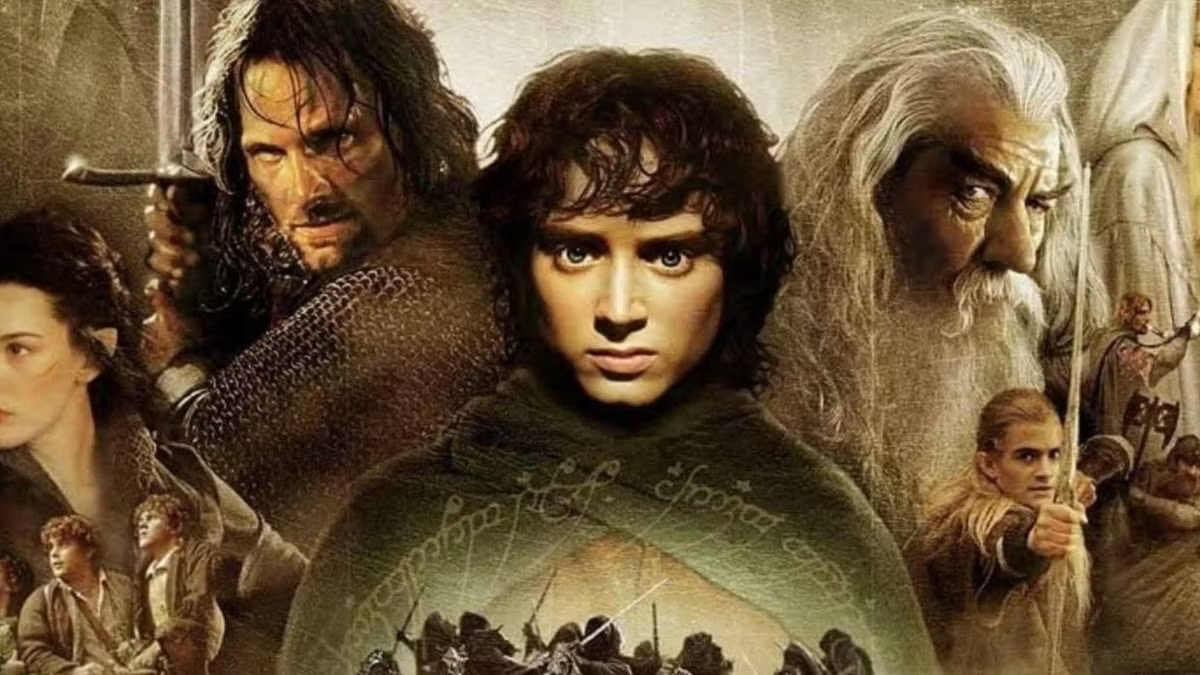
lord of the rings has made a name for himself on both the page and the screen, and while the trilogy is one of the best book-to-film adaptations, it does make changes. Fans can, and will, point to many examples; however, Peter Jacksonand the film is changed to one of the JRR Tolkienthe characters stand out. Of course, many have a lot to say about the portrait of Faramir (David Wenham), has a conflict with the One Ring just opposite the books, but there is a more important character that the movies change a lot.
Aragorn (Viggo Mortensen). In many ways, this change is less about what he does and more about how he does it, because in both versions, Aragorn is a member of the Society, a leader of the Armies of Men, and the rightful ruler of Gondor and Arnor. However, the films add credibility to his character that Tolkien never established and expand some aspects of his story. The product works for the movies, and It’s understandable that Aragorn Mortensen is a fan favorite, but it’s important to recognize that he’s not exactly the character Tolkien wrote.
Aragorn is not considered a reluctant hero in ‘The Lord of the Rings’
Aragorn is an important character for many reasons, but one key element of his story is his family situation. As the Heir of Isildur, heavy expectations are placed on his shoulders, and in the movies, he is reluctant to accept that. Aragorn says as much to Arwen (Liv Tyler) in Federation of the Circle. Although she states that he is not an ancestor, Aragorn says, “The same blood runs through my veins. The same weakness.” This feeling adds to the emotional journey as the character slowly accepts his role, proving himself more worthy than anyone else. Tormented by self-doubt throughout the films, Aragorn becomes an attractive character, far from what Tolkien intended.
The reluctant warrior is a popular character trope, but originally Aragorn is far more courageous. Tolkien’s version is proud of its legacy and he intends to claim his position as King, although he prioritizes destroying the One Ring. This change is very evident when the Fellowship arrives in Rohan and Aragorn, reluctant to give up his armor, cites his ancestry as a reason why he should not need it. Although this fits the character of the book Aragorn, the movie Aragorn would never consider sharing his family history so easily. Aragorn’s change of attitude doesn’t change the overall plot, but it does make him a very different character in the film than in the books.
The ‘Lord of the Rings’ movies added Stories for Aragorn
Jackson’s change not only changes his nature, but he adds to the stories for Aragorn. The most obvious is his romance with Arwen. Although the books mention their relationship, it is background information rather than a proper plot. Arwen herself is barely in the story, and what Tolkien wrote about their romance is mostly in the Appendices. It’s not quite as dramatic as the movies make it out to be. While Elrond (Hugo Weave) doesn’t want Arwen to give up her immortality, he doesn’t resist his popularity in the film, agreeing to their marriage on the condition that Aragorn first claim his place as King of Gondor and Arnor. The forbidden love story in the movie series features both Aragorn and Arwen, and it’s an interesting way to flesh out the character even though it’s not exactly like the book.
To emphasize the romance and arc of Aragorn’s trusted hero, the change also rewrites the reconstruction of Narsil to Andúril. In the book, this moment happens before the Alliance leaves Rivendell, which allows Aragorn to spend most of the story fighting with this sword. But the movies have another way. Elrond restores the broken sword and delivers it to Aragorn just in time to enter the Paths of the Dead. By delaying this event, the films emphasize the drama surrounding Aragorn’s reluctance to accept his destiny and his romance with Arwen. In many ways, these additional stories dive into the lore surrounding Aragorn and his family, which makes sense. After all, the movies can’t add appendices to explain these things like Tolkien did. In the end, the changes work because the change is done well, but Aragorn is a very different character in the movies than in the books.
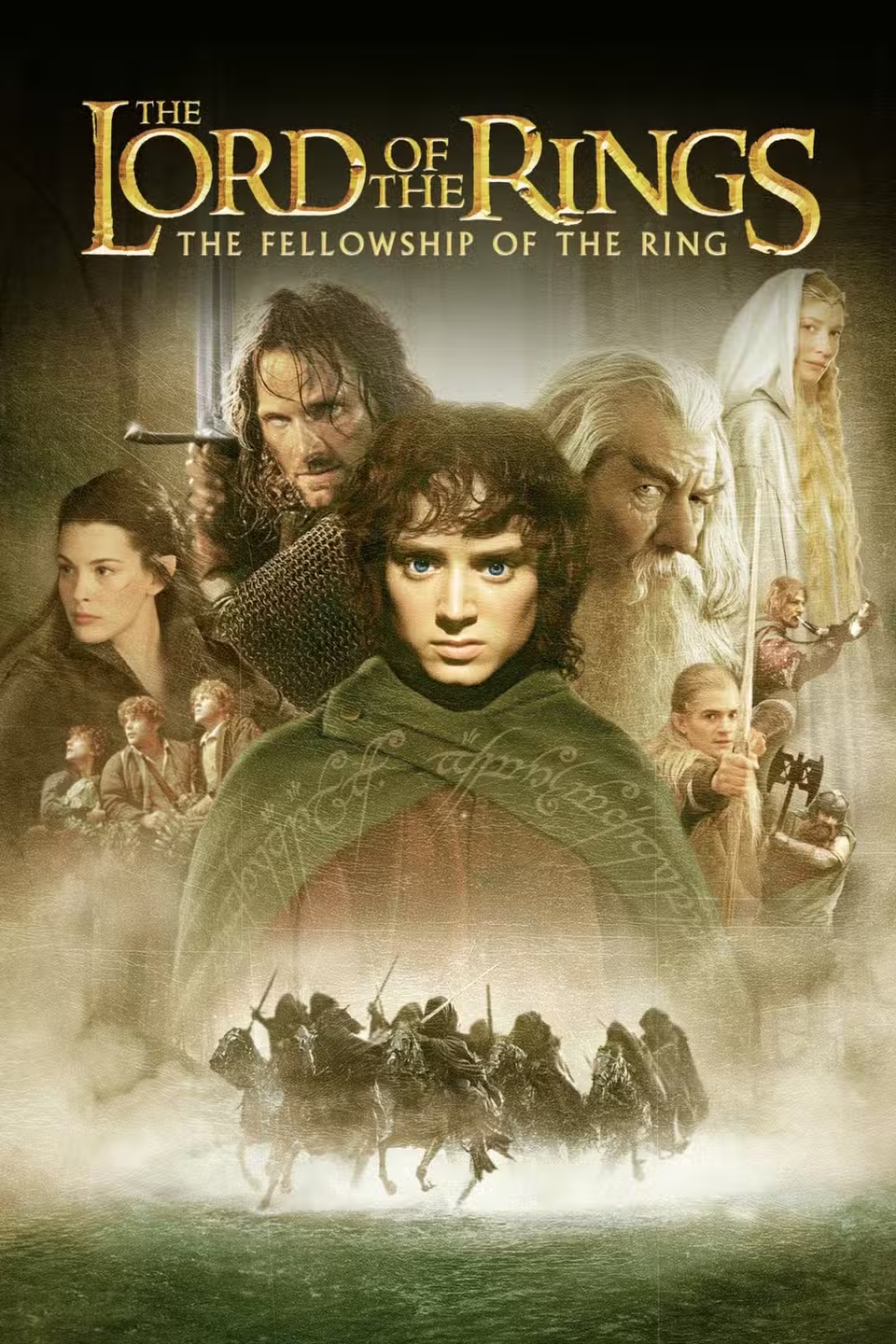
- Release date
-
December 19, 2001
- Running time
-
178 minutes