 Skip to content
The 1990s saw the publication of several of the greatest, most important, and most influential books of the entire 20th century. The decade was nothing short of transformational for literature, reshaping speculative fiction, pop culture, and the publishing industry in general. From the peak of maximalist postmodernism, to many a genre-bending work, to the birth of several game-changing book series, these ten years produced a remarkable number of books that deserve to be called perfect.
Sometimes—perhaps even usually— a book takes a varying amount of time to gradually reveal itself to be a downright faultless masterpiece. However, the ’90s produced ten particularly noteworthy masterpieces that reveal themselves as undeniably perfect as early as their first 10 pages. You could reasonably put the book down once you hit page 10 and think to yourself, “I’m about to read one of the most perfect books I’ve read in a while.”
‘Small Gods’ (1992)
Sir Terry Pratchett was one of the most beloved and influential satirical authors of his generation, and his Discworld series in particular completely redefined comedic speculative fiction. Even though Small Gods is the 13th installment in the series, it can be read as a standalone novel. It tells the origin story of the god Om, who’s reduced to a powerless tortoise because he only has one believer left.
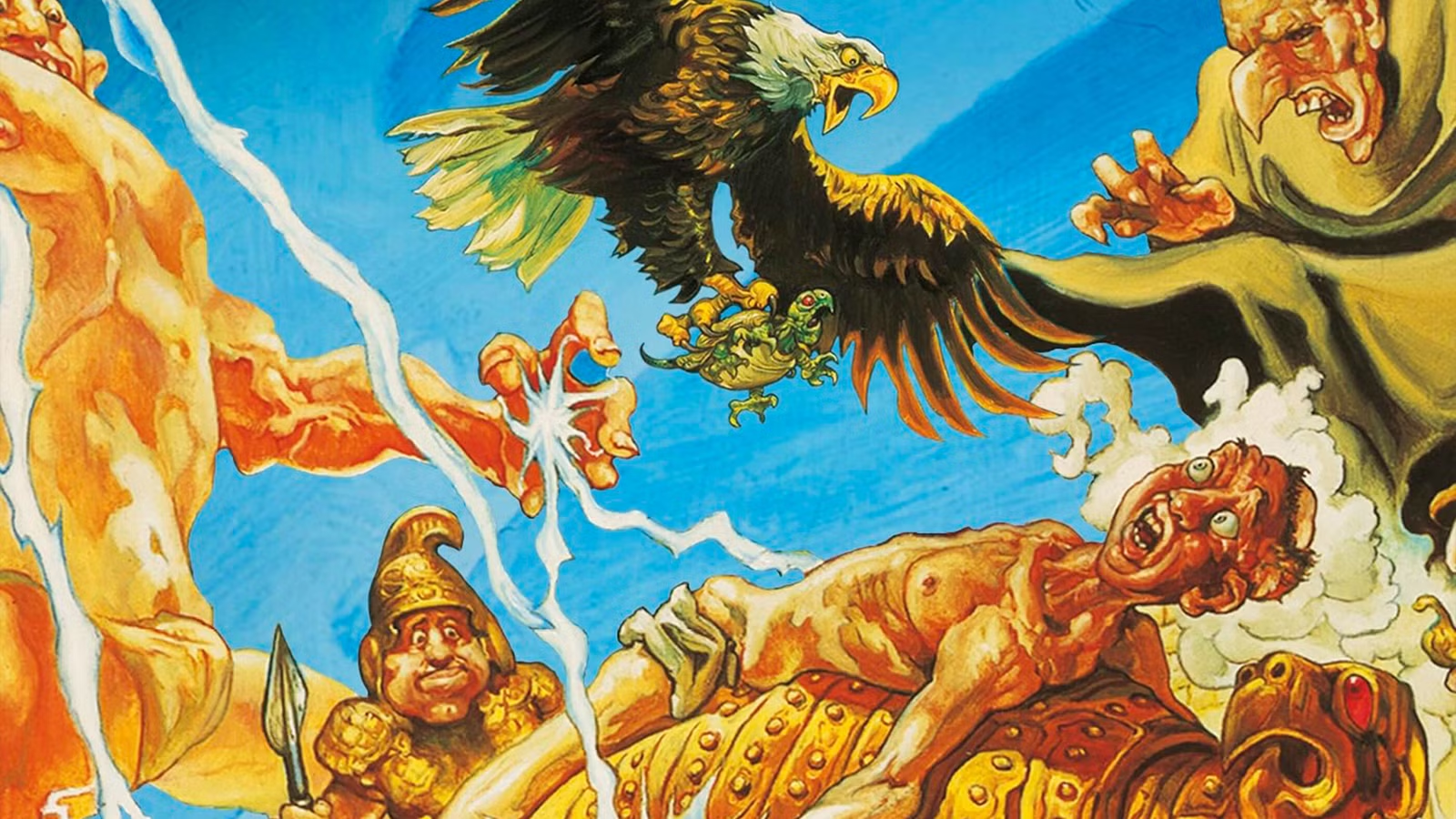
Pratchett was always great at writing opening chapters with a perfect balance between humor and establishing the philosophical themes of each respective story, and Small Gods is no exception. Pratchett uses those opening ten pages to tell a parable about an eagle dropping a tortoise, and then introduce readers to an already-transformed Om. With a perfectly satirical sense of humor, the novel establishes vibrant character dynamics and richly detailed political and religious themes right off the bat.
‘The God of Small Things’ (1997)

Arundhati Roy‘s The God of Small Things is undoubtedly one of the best debut novels of the ’90s, an Indian bestseller about two twins navigating their tumultuous childhood in 1969, and then their adult reunion in 1993. A paragon of modern postcolonial literature, it pairs beautifully lyrical prose with a potent critique of India’s caste system. All in all, it’s almost undeniably one of the best books of the ’90s.
In the novel’s first 10 pages, the twins reunite in their decaying family home, and it’s described how the two grew up thinking of themselves as essentially one person. For one, this is a gorgeous introduction to Roy’s uniquely flowery mastery of language, her evocative imagery making the twins’ old home feel like a character in itself. Coupled with the introduction of the lingering ghost of 1969 and Roy revealing right away that the story ends in tragedy, you can’t help but crave reading on after you hit page 10.
‘Killing Floor’ (1997)

With the series now being massively mainstream, largely thanks to its television and film adaptations, Lee Child‘s Jack Reacher books are essential reading for anyone who loves action thriller literature. It just so happens, though, that the character peaked with his first appearance. In Killing Floor, the former military police major is arrested for a murder he didn’t commit, only to discover that the victim is his brother and there’s a larger conspiracy at play.
It’s the sort of thriller book you know will be a masterpiece from the first 10 pages, where the mysterious Reacher is arrested for a murder he still knows nothing about while he’s having breakfast at a quiet Georgia diner. Child’s short, punchy, staccato-style prose pairs with Reacher’s immensely tactical mind perfectly, and this whole opening sequence is a masterclass in building subtle tension while hooking the reader with an instant mystery.
‘Red Mars’ (1992)

Kim Stanley Robinson‘s Red Mars is one of the greatest and most important hard sci-fi masterpieces of the ’90s. It’s about a team of scientists who land on the Red Planet to build the first human colony there, triggering a high-stakes political, economic, and ecological struggle. The whole Mars trilogy is phenomenal, but it’s this Nebula Award recipient that stands out as one of the most memorable novels ever written about Mars.
In the book’s opening pages, political tensions boil over during a festive night in the new Martian city of Nicosia, after the legendary “First Man on Mars” is assassinated. Where many hard sci-fi books open with cold exposition dumps or elaborate bits of world-building, Red Mars opens in media res, instantly imbuing the story with a sense of high-stakes urgency that doesn’t fade away at any point during the novel.
‘The First Chronicles of Druss the Legend’ (1993)

There is arguably no author of heroic fantasy more foundational or influential than David Gemmell, whose books about Druss the Legend (one of the most memorable antiheroes in all of fantasy literature) are among the greatest in the history of the subgenre. The character’s first appearance was in Gemmell’s debut, Legend, and The First Chronicles of Druss the Legend is that book’s prequel. In it, a seventeen-year-old Druss transforms into an axe-wielding killing machine after slavers kidnap his young wife.
The first 10 pages of the book see a weary Druss traveling through a dangerous forest, where he encounters a terrified girl fleeing from a band of outlaws, setting the stage for him to step into his warrior path. Instead of wasting any time easing the reader into this world, Gemmell throws them straight into the atmospheric action with punchy prose and a high sense of momentum. Right away, Gemmell establishes Druss as tough and genuinely scary on the surface, but deeply caring underneath.
‘Needful Things’ (1991)

The modern king of horror literature, Stephen King is famous for a lot of things, and one of them is how exceptional he always is at crafting openings that immediately hook readers. The first 10 pages of Needful Things are no exception. One of those thriller books more intense than any movie, this supernatural tale follows a mysterious antique shop owner who sells residents their deepest desires at a bargain price, provided they play malicious pranks on their neighbors.
The book’s opening ten pages see the antique dealer arrive in Castle Rock, Maine, and open his strange new shop, welcoming his first customer. This was the fourth Stephen King book ever to feature the town of Castle Rock, and the first 10 pages of Needful Things make the setting feel particularly alive and complex. As for Leland Gaunt himself, he’s such an instantly intriguing character that Needful Things‘ intoxicating, slow-burning sense of suspense doesn’t wait longer than 10 pages to manifest itself.
‘Blindness’ (1995)

The ’90s didn’t only deliver absolutely perfect literary masterpieces in the English language. For example, we also have José Saramago‘s Portuguese novel Blindness, about an unexplained epidemic of blindness sweeping through an unnamed city, forcing authorities to quarantine the infected in an asylum. In 1998, Saramago won the Nobel Prize for Literature, and Blindness was one of the most noteworthy masterpieces cited by the committee when they announced the award.
The book’s introductory pages find a driver suddenly going blind with a milky, glowing white vision while waiting at a traffic light. The blindness then spreads to the thief who steals his car and the doctor he visits. It’s a high-concept hook that generates an instant sense of mystery, panic, and claustrophobia so effective that it’s hard to put the book down after that.
‘Underworld’ (1997)

Don DeLillo‘s Underworld is one of the most important postmodern American novels not just of the ’90s, but perhaps of the entire 20th century. It’s one of the darkest books of all time, tracking five decades of Cold War history, nuclear anxiety, and cultural shifts in the United States. Although this 800-page literary behemoth is often considered the greatest achievement of DeLillo’s career, it’s definitely not for those who prefer their ’90s novels more straightforward.
Right off the bat, you get a clear idea of what you’re getting into with Underworld. The book opens with one of the most iconic book prologues of the decade. At the 1951 Giants-Dodgers baseball game where Bobby Thomson hit a historic home run, J. Edgar Hoover is informed of the Soviet Union’s first atomic bomb test. This juxtaposition of mass joy and Cold War nuclear dread still works awfully well to this day, resulting in one of the most confident and complex first 10 pages of any book of its kind.
‘A Game of Thrones’ (1996)

Well before the unprecedented success of the HBO TV adaptation launched the books into the stratosphere in terms of mainstream popularity, George R. R. Martin kicked things off with A Game of Thrones, the legendary first installment in his Song of Ice and Fire series. In it, an honest lord’s investigation of a royal murder sparks a deadly power struggle, plunging the continent into civil war.
Needless to say, it’s one of the best fantasy books published since 1990, showing just how much the high fantasy subgenre had evolved and matured in the post-Tolkien decades. Even the first 10 pages of such a massive novel are crucial, and A Game of Thrones opens with three Night’s Watch scouts discovering some mutilated corpses, which vanish before they are attacked by the supernatural White Walkers. It’s a dark, violent, and masterfully atmospheric subversion of traditional high fantasy tropes.
‘The Secret History’ (1992)

Donna Tartt‘s The Secret History is one of the most fun thriller books of all time, one which takes the basic formula for a whodunnit and transforms it into a “whydunnit” by turning the structure on its head. Indeed, The Secret History is not about a detective trying to figure out (alongside the reader) who committed a murder, but rather about a group of college students who commit two murders and slowly collapse under the weight of their guilt.
Tartt opens The Secret History with 10 pages that are nothing short of revolutionary. Where most murder mysteries would open with a mysterious murder and instantly get the reader wondering how it happened, Tartt tells us who died, who killed him, and how it happened right off the bat. This way, the mystery becomes not about the circumstances of the inciting incident, but rather about its emotional and psychological consequences. Anybody should be able to get to the tenth page of The Secret History and get a perfect understanding of why it’s widely considered a perfect masterpiece.
