 Skip to content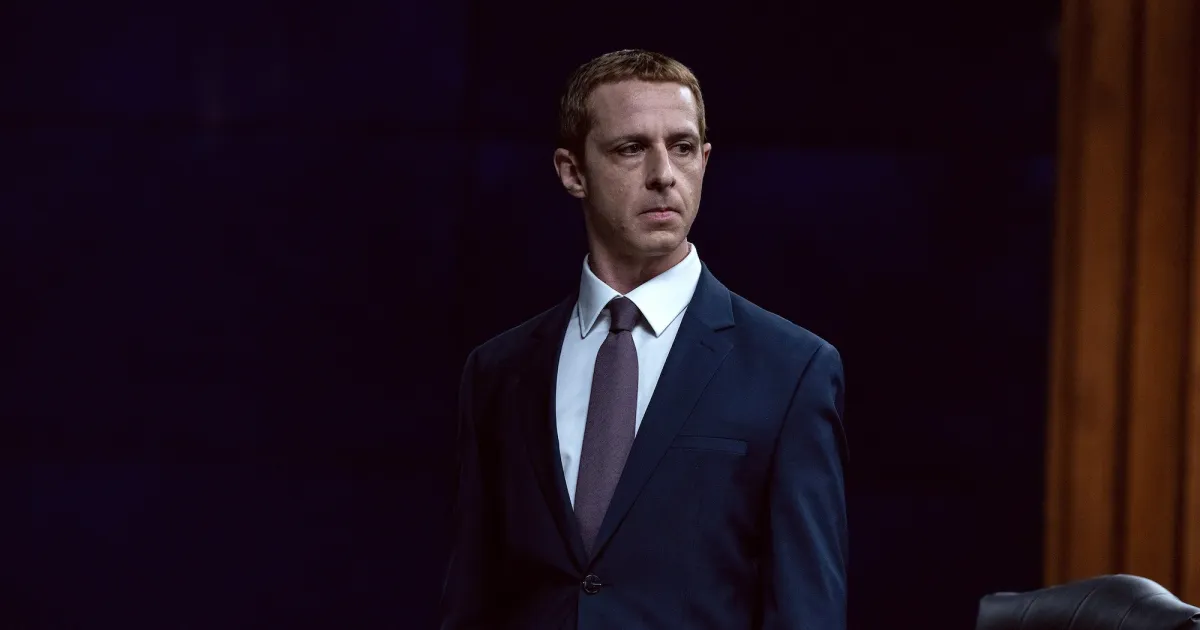
Jeremy Strong too busy “enthusiastic” to pay any attention to criticism of his acting process.
“I’m just there to fully commit to serving the stuff,” Strong, 47, told The New Yorker in an interview published on Friday, October 2, addressing claims that some of his costars have been harassed by his art. “If some people feel like I’m taking it too seriously, or if it changes the molecules in the room in a way that makes something uncomfortable, I guess that’s something I don’t feel I have to apologize for.”
He continued, “I believe – and I think the directors I work with all believe – that it is in the service of the material. I personally think that a lot of the ideas that are there are of a personal nature.”
Strong is one of many actors who They prefer to stay in character after cameras stopped advancing as a means of creating an authentic image on the screen. While Strong’s colleagues might raise their eyebrows at his approach, he pressed on The New Yorker that he would “never” get into their own achievements.
“It is never my intention to interfere with anyone else’s knowledge or anyone else’s approach,” said the Social account said the actor. “First of all, do no harm, right? But you do what you do, and completely.”
Famous strong recruitment acting technique for playing Kendall Roy in HBO Successwhich lasted four seasons from 2018 to 2023.
“I think you’re like a detective, and you’re just looking for clues,” he recalled of his process for getting into character. “So you read everything. Every time it’s different. You’re really starting from nothing every time.”
While Success loosely based on the Murdoch family, Strong didn’t want to reach out to real media moguls for inspiration.


Jeremy Strong is mostly emphasizing his old Success fare, making fun of his acting style. The actor, 46, explained his process while talking about his role as Roy Cohn in the film The Apprentice, telling Deadline on Tuesday, January 7, “When I look at the kind of transformative work based on historical characters that are. […]
“I don’t think it was – certainly that family, along with many other families, is in the genome of the Jesse [Armstrong, our show creator] write, but it’s not a one-to-one issue,” he said of the comparisons. “I’m not talking about them.”
As Strong moves on to represent the founder of Meta Mark Zuckerberg in Aaron Sorkinand future The Social Accountused a similar approach.
“I hope the film is a dialectic rather than a polemic,” he said of the film. “There’s a kind of trend, in general, of ‘It’s Facebook’s fault – like, everything, everything. I don’t think it is. When we talk about the reduction of reality and the decline of civil dialogue, our stories play a very important role in that. I personally – and that’s why I contacted Mark – was very protective of him, when we were making the film for my director. “
