
On the one hand, reading sci-fi is like going on an adventure, whether that’s exploring outer space, parallel universes, or distant futures to see how humanity evolves when unimaginable technology becomes part of everyday life. On the other hand, sci-fi is also supposed to be a brain-twisting challenge. It’s not about making things unnecessarily complicated, but about pushing readers to think beyond what they already know.
Science is built on logic and reasoning, but the fiction element dares to take those ideas into unimaginable territory, exploring what happens when scientific theories are pushed to their limits and challenge our assumptions. It’s one thing to study science in its purest form, but seeing how far it could evolve is a different experience altogether. These books challenge readers to think outside the box and to speculate what the future could potentially hold. From three suns threatening to throw an entire planetary system into chaos to questioning whether consciousness is holding human evolution back, here are the most mind-bending sci-fi books of all time, ranked.
5
‘Solaris’ (1961)
With multiple film adaptations by Andrei Tarkovsky and Steven Soderbergh, there’s a reason why Solaris remains a sought-after sci-fi novel. Psychologist Kris Kelvin arrives at a research station orbiting Solaris, a mysterious planet almost entirely covered by a giant ocean that appears to be alive. For decades, scientists have tried to communicate with this strange alien presence, but none have come close to figuring out how it works. Things take an even stranger turn when the ocean begins creating physical copies of people buried in the researchers’ memories. For Kelvin, that means coming face-to-face with Harey, his deceased lover whose suicide still haunts him.
Sci-fi fans are used to seeing aliens as strange-looking creatures or advanced civilizations with their own languages, customs, and ways of thinking. Solaris turns the tables by imagining extraterrestrial intelligence in the form of a gigantic living ocean. Rather than giving this alien a humanoid body or familiar way of communicating, writer Stanisław Lem explores the possibility of an intelligence that works nothing like the human brain, leaving readers to decipher what it’s trying to convey through the visions it produces. The ocean’s consciousness may be spread across its entire planetary body, making familiar ideas like thinking, communication, and self-awareness difficult to apply.
4
‘Blindsight’ (2006)
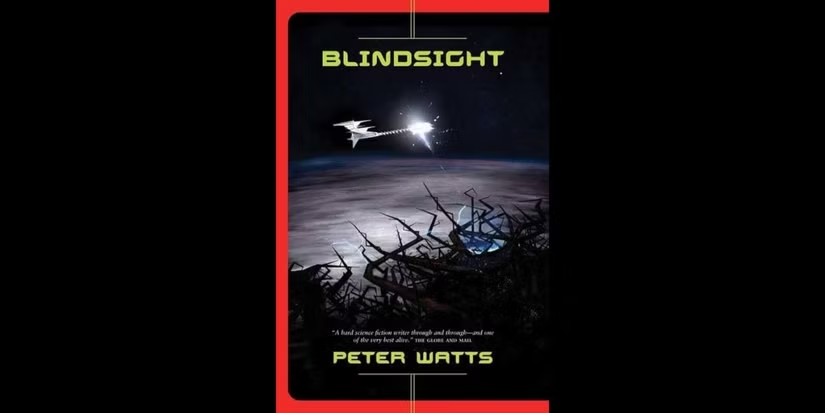
In Blindsight, the year is 2082: humanity receives its first sign of extraterrestrial life when thousands of mysterious objects burn through Earth’s atmosphere. To investigate a strange alien signal near the edge of the solar system, a crew of five transhuman specialists board the antimatter-powered spaceship Theseus. Led by a genetically resurrected vampire, the crew discovers Rorschach, a massive alien structure inhabited by highly intelligent organisms known as Scramblers. However, these creatures appear to function without self-awareness, challenging everything humanity understands about intelligence and evolution.
Blindsight tackles a tricky philosophical question: whether intelligence is truly dependent on consciousness. The novel takes its title from a neurological phenomenon in which people with damage to their primary visual cortex can respond to visual stimuli without consciously seeing them. Author Peter Watts takes this concept one step further, exploring the possibility that consciousness isn’t even necessary for survival. It’s a classic logic-versus-feelings debate, but with a much darker evolutionary twist. The novel challenges the idea that self-awareness makes humans superior, suggesting that a species without an ego or conscious sense of self could actually outperform humanity. It presents human consciousness as a potential evolutionary disadvantage rather than the advantage we have always assumed it to be.
3
‘The Three-Body Problem’ (2008)
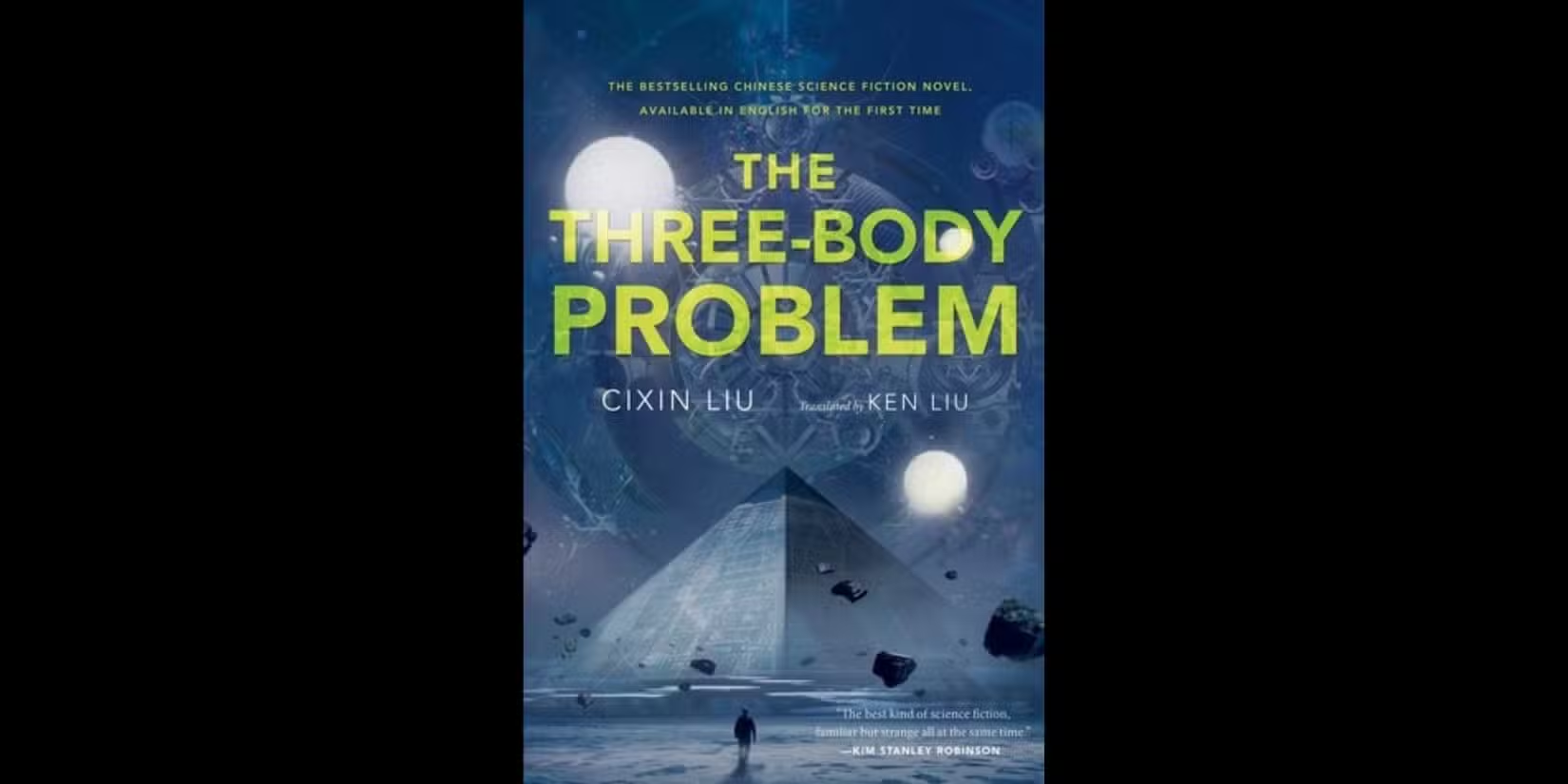
Now adapted into a Netflix hit, The Three-Body Problem begins during China’s Cultural Revolution, when astrophysicist Ye Wenjie becomes involved in a secret military project searching for extraterrestrial life. After receiving an unexpected message from an alien civilization on a distant planet called Trisolaris, she makes a decision that will put humanity’s future at risk. Centuries later, Earth is still enjoying technological progress when it discovers that an alien invasion is on the way. Worse, the Trisolarans have already found a way to interfere with human scientific development, threatening to stop humanity from preparing for what’s coming.
The three-body problem comes from classical physics and describes how three objects, such as planets or stars, affect each other through gravity. Liu Cixin takes this idea to a much bigger scale by imagining what would happen if a planet had three suns instead of one. Their gravitational pull creates unpredictable movements, causing the planet to swing between extreme heat and freezing cold. Unlike Earth, which enjoys a relatively stable orbit around a single sun, a planet caught between three competing suns would struggle to maintain a livable climate. One sun alone is already precarious enough for humanity, let alone three chaotic ones.
COLLIDERInteractive
Crew Projection
Sci-Fi/Quizzes/Hero Match
2
‘Anathem’ (2008)
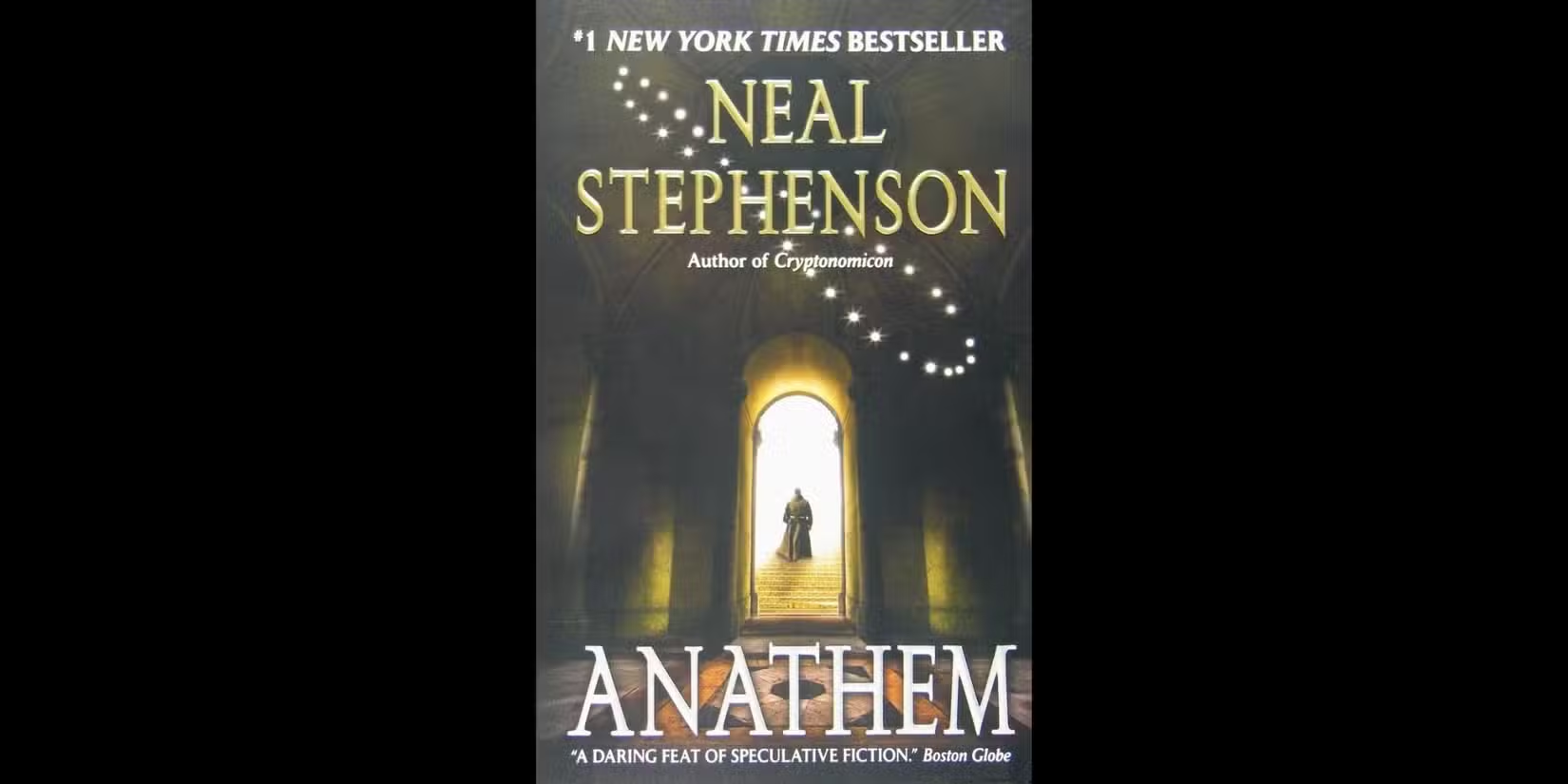
Anathem brings readers to the planet Arbre, where scholars live in secluded monasteries called concents, devoting their lives studying science, philosophy, and mathematics while staying largely cut off from the outside world’s technology. But their peaceful lives are rudely interrupted when Fraa Erasmas, a young monk-in-training, learns that an alien spacecraft has appeared in orbit around their planet. As political authorities scramble to control the discovery, Erasmas and his fellow scholars begin investigating the mysterious visitors, only to discover that the aliens might come from distant lands beyond what the eye and mind can comprehend.
If you think you know everything about our current reality, think again. Author Neal Stephenson injects some pretty wild scientific ideas into Anathem and spins them into an adventure involving consciousness, parallel universes, and alien civilizations. The novel explores the possibility that tiny quantum processes inside the human brain could help create consciousness, while also imagining different universes that can interact with one another. Things get even stranger when the story suggests that mathematics might exist independently of the physical world and could actually shape reality itself. Between conflicting timelines and multiple layers of existence, Anathem is a serious brain workout that will have readers questioning if there’s more to life than a single, stable universe.
1
‘Diaspora’ (1997)
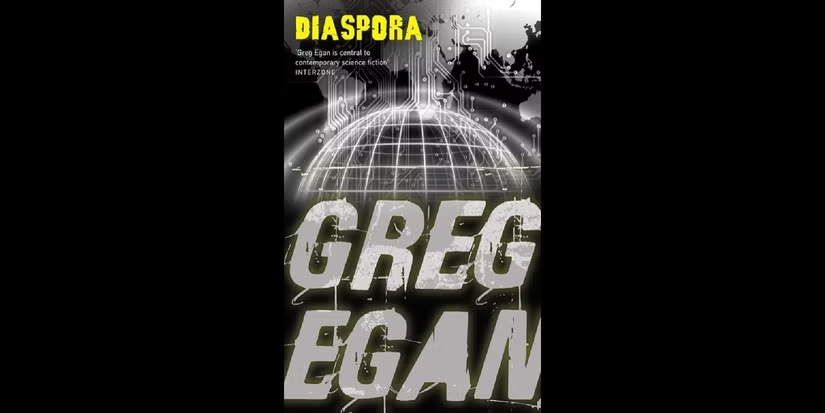
Diaspora is set in the 30th century, where humanity has come a long way from its biological roots. Alongside humans, artificial intelligences and digital consciousnesses now live in simulated worlds known as polises. But when astronomers detect a cosmic catastrophe threatening Earth, a group of physicists ventures to the galaxy to figure out what’s going on. Led by Yatima, a digitally-born intelligence with a knack for mathematics, the expedition soon discovers that the universe doesn’t play by the rules of established physics. Their search takes them beyond spacetime and across multiple universes, messing with everything they thought they knew about existence, intelligence, and reality.
For readers who love high-concept mathematics and speculative physics, Diaspora is an engrossing rabbit hole. Instead of simply using established physics to explain futuristic technology, writer Greg Egan builds an entirely new theoretical framework called Kozuch Theory. It describes elementary particles as semi-point-like wormholes whose properties emerge from six-dimensional geometry (imagine tiny particles as little tunnels in space, with their shapes and twists in six dimensions determining how they behave). Along the way, Egan toys with concepts like five-dimensional space, rotational axes, and wave functions. These abstract mathematical ideas reshape the rules of reality itself, forcing readers to rethink what they know about the universe.